Yovid
Montage of AI-generated video clips

Leonardo AI Review: Images, Video and Tokens

Leonardo AI grew from an image generator into a Canva-owned studio where video, editing and LoRA training share one token balance. Here is what it does well, what reviewers flag, and how Yovid compares.

The short version

Should you pay for Leonardo AI?

Yes, if images are most of your output. Leonardo AI comes from Leonardo Interactive, an Australian company Canva bought in July 2024. It trains in-house Lucid and Phoenix image models and Motion video models, then adds outside engines such as Seedance 2.5, Veo 3.1, Kling, Nano Banana and GPT-Image-2, along with an API, a 105-megapixel upscaler, Omni editing, Flow State and trainable LoRA Elements. The free tier refills 150 tokens every day; subscriptions run from $12 up to $60 monthly. Trustpilot gives it 4.7 across 1,529 reviews, yet the low scores keep naming strict filters, balances wiped on cancelling and refund refusals. Yovid is a multi-model video and image platform with Seedance 2.5 on every paid plan and pay-once credit packs.

Nora

NoraYovid editor

Details about Leonardo AI last checked , using the Leonardo AI homepage, its plans page, the API page and the Leonardo.Ai Terms of Service.

Operator
Leonardo Interactive Pty Ltd, based in Australia and part of Canva since July 2024
Ratings
4.7 on Trustpilot over 1,529 reviews; 4.8 on the US App Store over 11K ratings
Free tier
A daily refill of 150 fast tokens; whatever you make is public
Cheapest plan
Essential: $12 a month, or $10 a month paid yearly, for 8,500 tokens
Refunds
Its terms give no refund window; a cancellation applies once the paid period ends

What Leonardo AI Can Do

Images came first at Leonardo and still lead; video, editing, custom training and developer access were added later around the same token wallet. Here are the tools people come for, each paired with the closest option on Yovid.

Image Generation on Lucid, Phoenix and Partner Models

Start from words or from a reference picture, then pick an engine yourself or let Auto choose. Image Guidance, character and style consistency, background removal and Blueprints (preset recipes for routine jobs) sit around the prompt box. In-house there are Phoenix, Lucid Realism and Lucid Origin; the product pages and FAQ also list FLUX, Seedream 4.5, Nano Banana Pro and 2, and GPT-Image-2.

The best deal here is for heavy image users. Once a Premium or Ultimate allowance runs dry, Leonardo’s in-house image models carry on in a slower “relaxed” lane, whereas partner engines like Nano Banana and GPT-Image bill tokens for every picture.

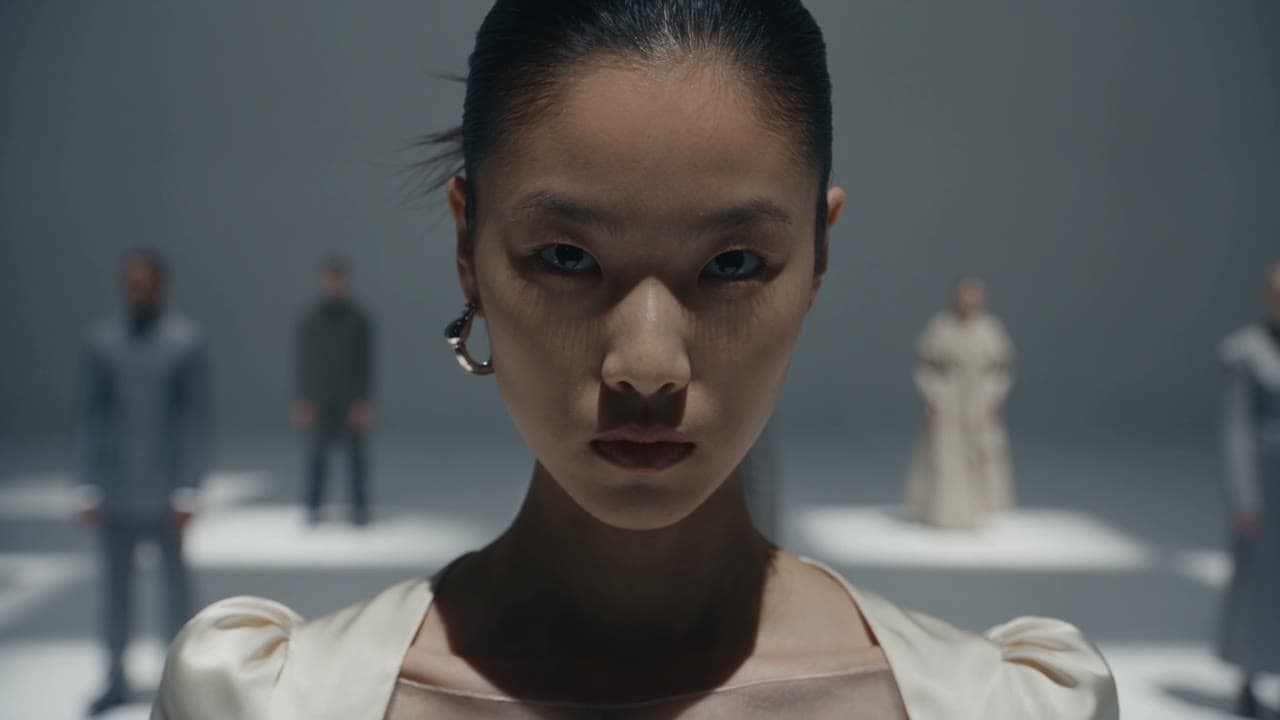
Fashion image created with the Yovid image generator

The Yovid way

Yovid’s image generator offers GPT Image 2.5, Seedream 5.0 and Nano Banana, and Pro or Premium adds a year of unlimited images on the supported image models.

Open the image generator
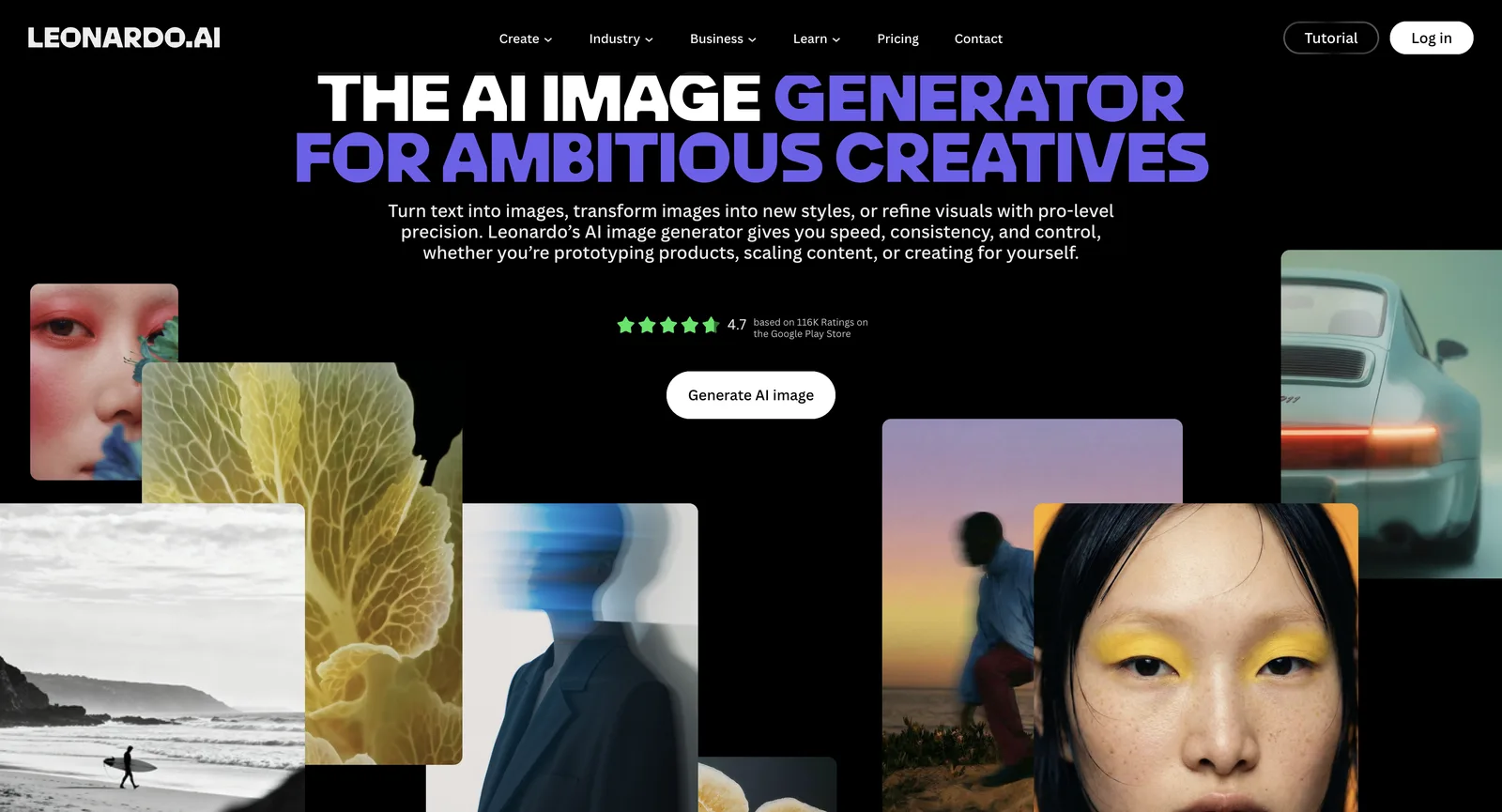
Image generator landing page on leonardo.ai, signed out: a bold headline aimed at ambitious creatives, sample portraits and a white button to start generating
Captured from leonardo.ai/ai-image-generator while signed out, October 16, 2026.

Video from Prompts and Stills, Seedance and Veo Included

For clips, Leonardo accepts a written prompt or a still, lets you pin a start frame and an end frame, and offers Auto model choice plus video Blueprints such as zoom-outs and product spins. Motion 1.0 and 2.0 are its own; on October 16, 2026 the pricing FAQ and the API page also listed LTX-2, MiniMax H3, Wan 2.6, Hailuo 2.3, Seedance 2.5, Kling 3.0 Turbo and 2.5 Turbo, Sora 2 Pro and 2, and Veo 3.1 and 3.

Every video engine has its own token price, and the public pricing page leaves those prices out. Relaxed video exists only on Ultimate and team plans, and only for a short list of models.

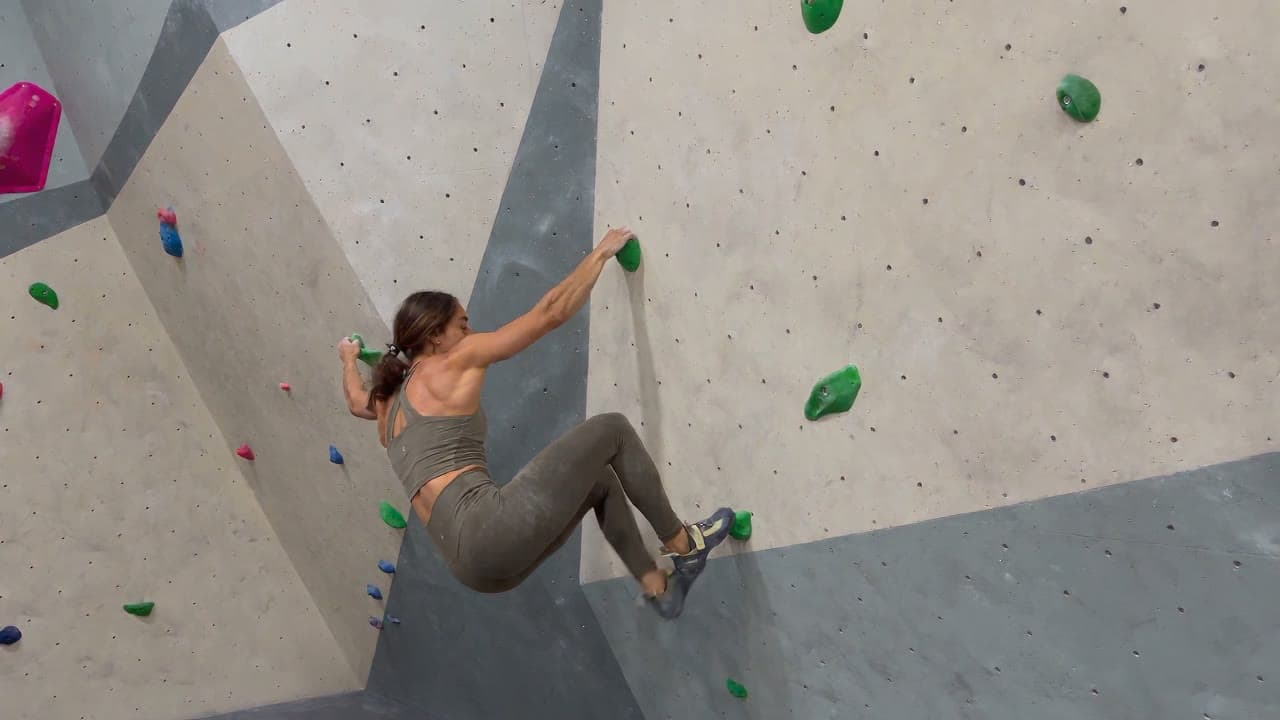
Frame from a climbing clip generated on Yovid

The Yovid way

Yovid puts Veo 3.1, MiniMax H3, Kling 3.0, Wan 3.0 and both Seedance 2.5 and 2.0 behind one composer, with each run’s credit price displayed before you start.

See every model
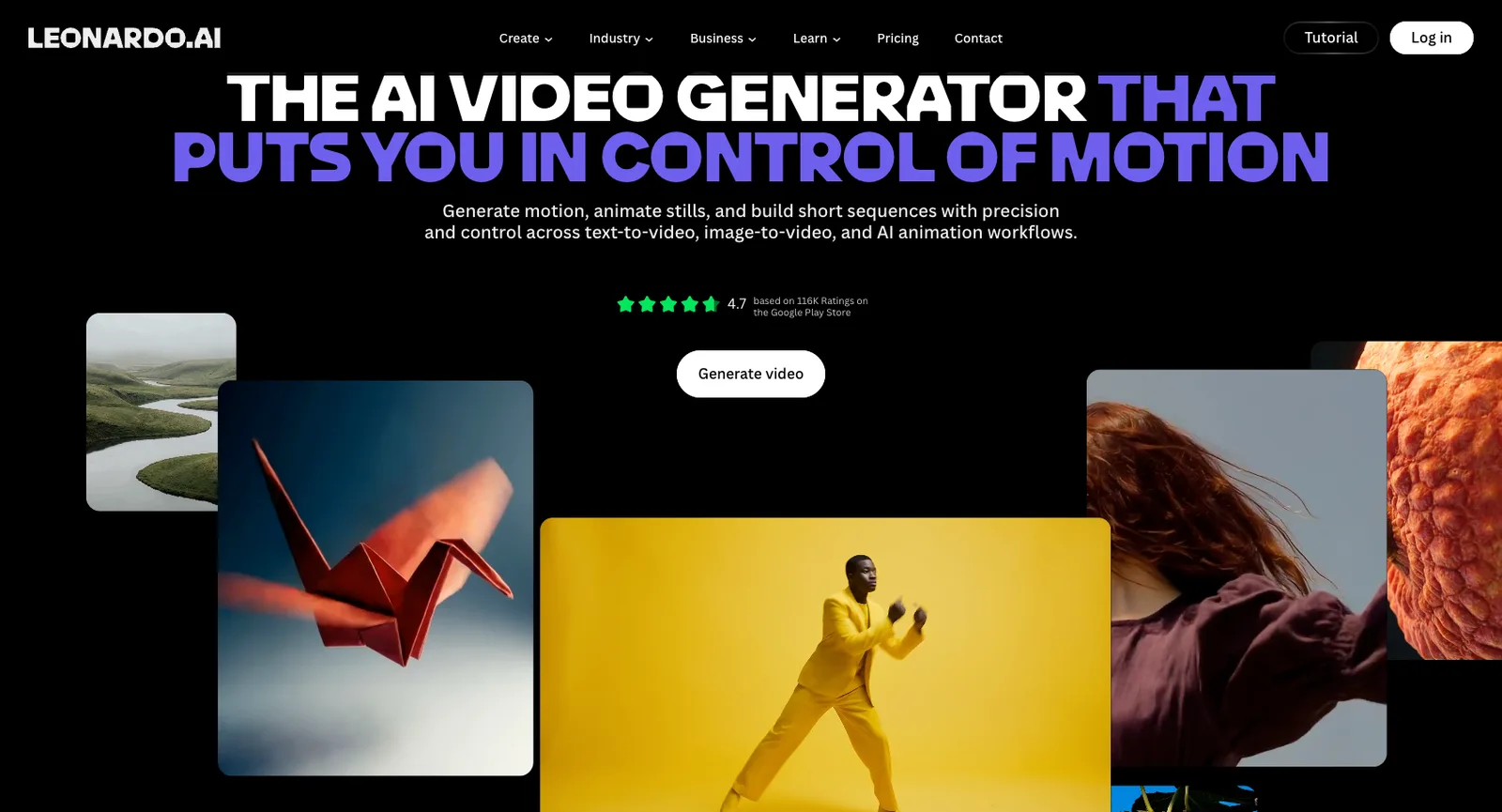
Video generator page on leonardo.ai, signed out, promising control over motion above a row of sample clips and a Generate video button
Captured from leonardo.ai/ai-video-generator while signed out, October 16, 2026.

Flow State for Brainstorming

Flow State is meant for the messy start of a project. You type a loose idea, scroll a feed of visual takes, keep the promising ones and tap More Like This to branch from them, then export whatever works. It is about comparing directions, not perfecting a single frame.

There is no free lane here: the FAQ leaves Flow State out of relaxed generation, so every batch costs tokens.

Frame from an AI Canvas project on Yovid

The Yovid way

Yovid’s AI Canvas lays image and video steps out on one board and chains them, so a frame you like can feed straight into a clip.

Try AI Canvas
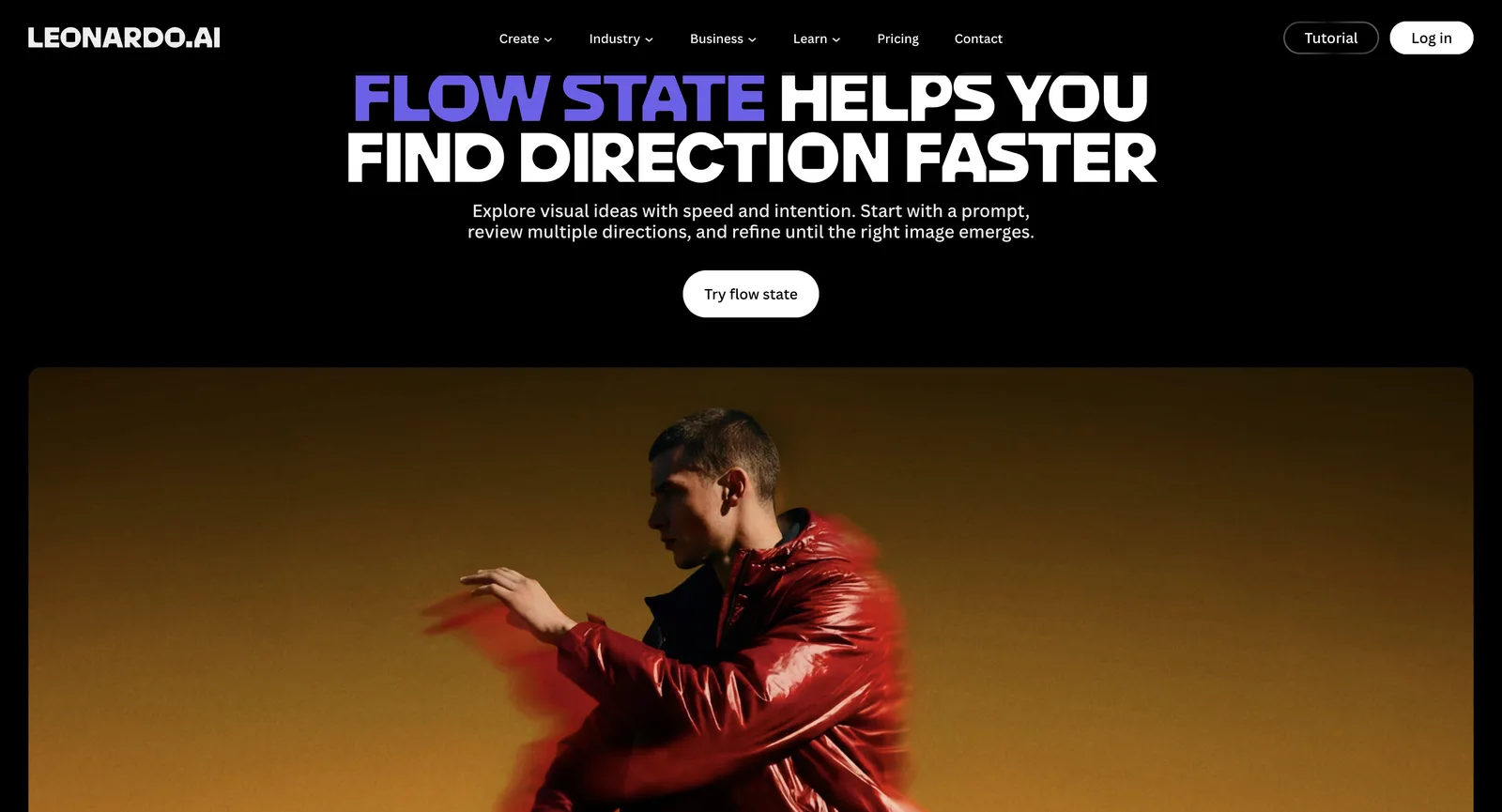
Flow State page on leonardo.ai, signed out, with a headline about finding direction faster and a button to try it
Captured from leonardo.ai/fast-track-your-creativity-with-flow-state while signed out, October 16, 2026.

Omni Image Editing

Any image, generated on Leonardo or uploaded, can be opened in Omni, where you say what should change: drop an object, swap one element for another, rework the lighting or the layout. According to its page, Omni is driven by Nano Banana Pro, Nano Banana 2 and GPT-Image-2, and Blueprints add bulk resizing, object removal and custom relighting.

If the picture already exists and only needs fixing, this keeps you out of a separate photo app.

Still photo used as the opening frame of a Yovid image-to-video clip

The Yovid way

Happy with a still? Drop it into Yovid’s image to video as the opening frame, then write the movement you want; Seedance 2.5 can also take reference pictures, clips and sound.

Open image to video
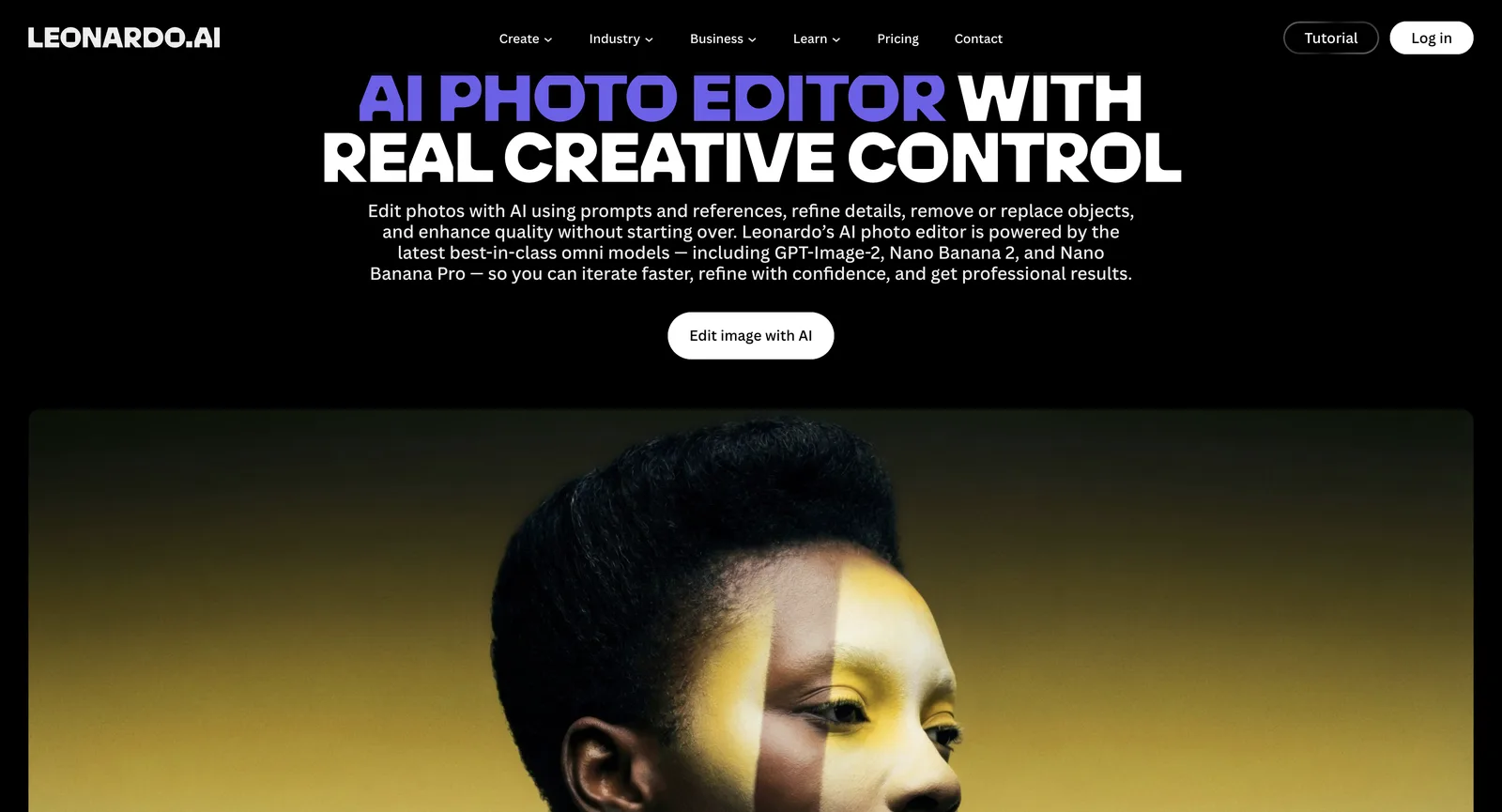
AI photo editor page on leonardo.ai, signed out, naming Nano Banana Pro, GPT-Image-2 and Nano Banana 2 as its models, above an Edit image with AI button
Captured from leonardo.ai/ai-image-editor while signed out, October 16, 2026.

Conversational Video Editing

Leonardo’s video editor only handles clips made inside Leonardo. You open one, write what should be different, optionally attach a picture as a style or character reference, and export. The page credits Kling, Wan 2.7 and Seedance 2.5 as the engines, and the aim is to rework part of a scene instead of rendering the whole clip again.

Edits happen through chat, with no timeline in sight: the page says nothing about trimming, captions or mixing sound.

Frame from a vineyard clip edited with Yovid video to video

The Yovid way

Yovid’s video to video reworks footage you upload: swap a product, rebuild the background or extend the shot, on Seedance 2.5, Kling or Wan 3.0.

Open video to video
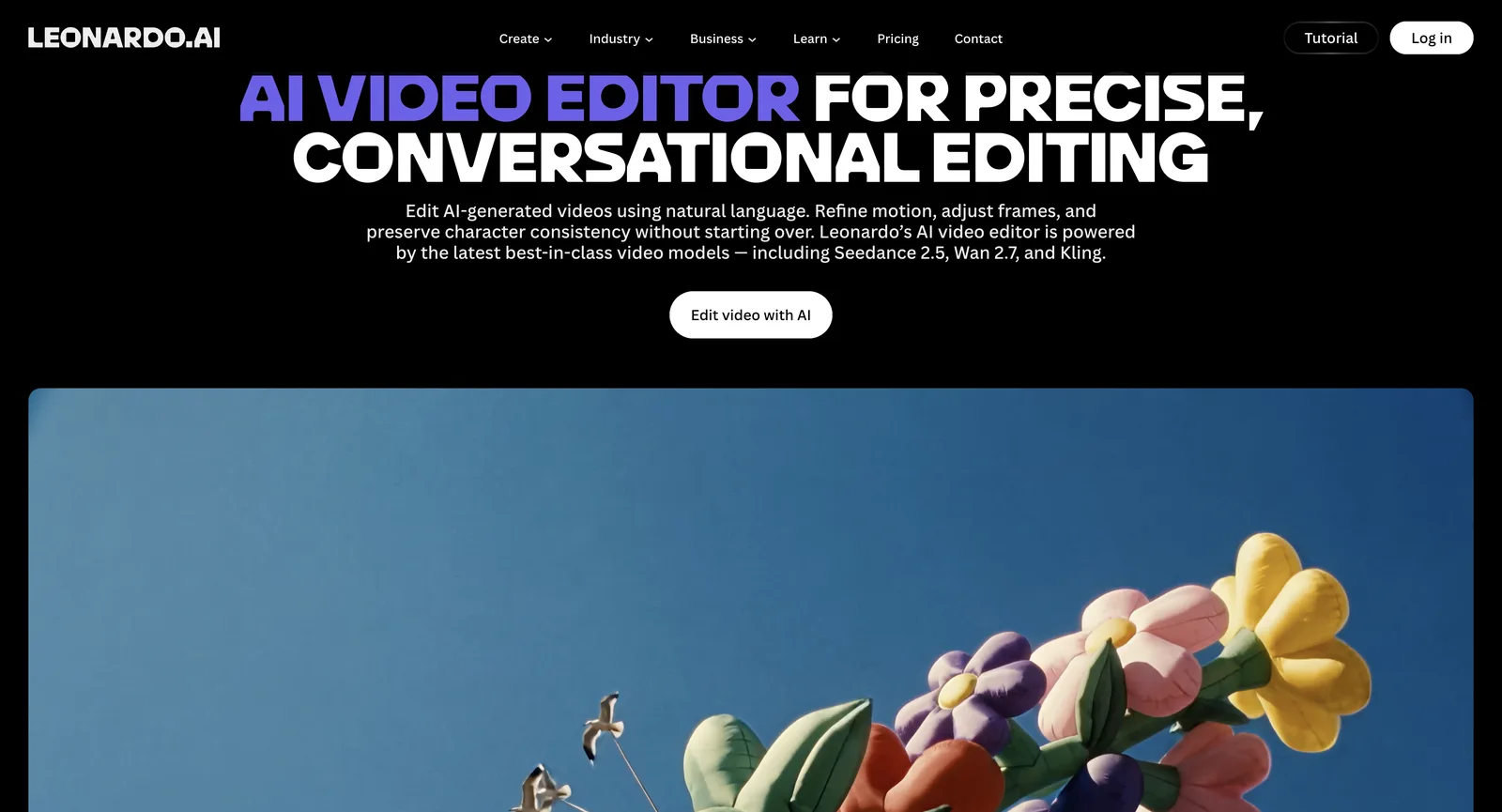
Video editor page on leonardo.ai, signed out, pitching precise conversational edits and listing Kling, Wan 2.7 and Seedance 2.5 as its models
Captured from leonardo.ai/ai-video-editor while signed out, October 16, 2026.

Universal Upscaler up to 105 Megapixels

Leonardo pitches its Pro upscaler at AI-made images. Precise mode sticks to the source and can clean up AI artifacts; Creative mode invents fresh detail at subtle, balanced or strong strength. The page promises output as large as 105 megapixels from inputs up to 20 MB, and a one-click export into Canva.

For posters, prints and billboards it is among the most distinctive things Leonardo sells.

Frame from the Yovid upscaler demo

The Yovid way

Yovid has its own image upscaler for sharpening and enlarging stills, plus a video upscaler for finished clips.

Open the image upscaler
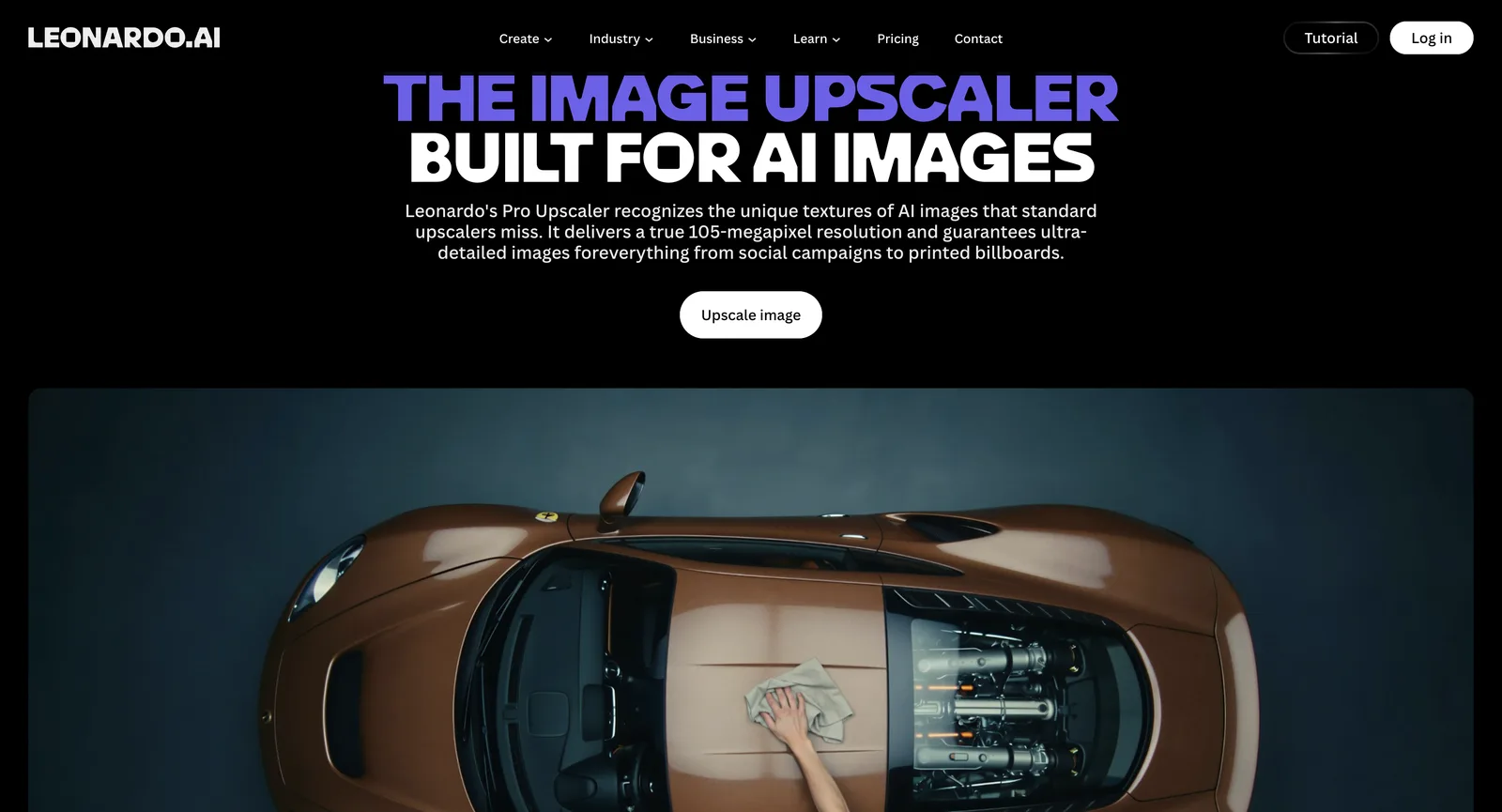
Universal Upscaler page on leonardo.ai, signed out, advertising 105-megapixel output for AI images above an Upscale image button
Captured from leonardo.ai/universal-upscaler while signed out, October 16, 2026.

Elements: Custom LoRA Training

Elements is Leonardo’s version of LoRA training. Upload a hand-picked batch of pictures showing one face, product or style, Leonardo builds an Element from them on the Flux Dev base model it uses, and you switch it on while generating to keep results consistent. Teams can share Elements, and paid plans hold between 10 and 50 personal models.

When one character or product has to recur across hundreds of images, a trained model is the dependable route, and Yovid has nothing equivalent.

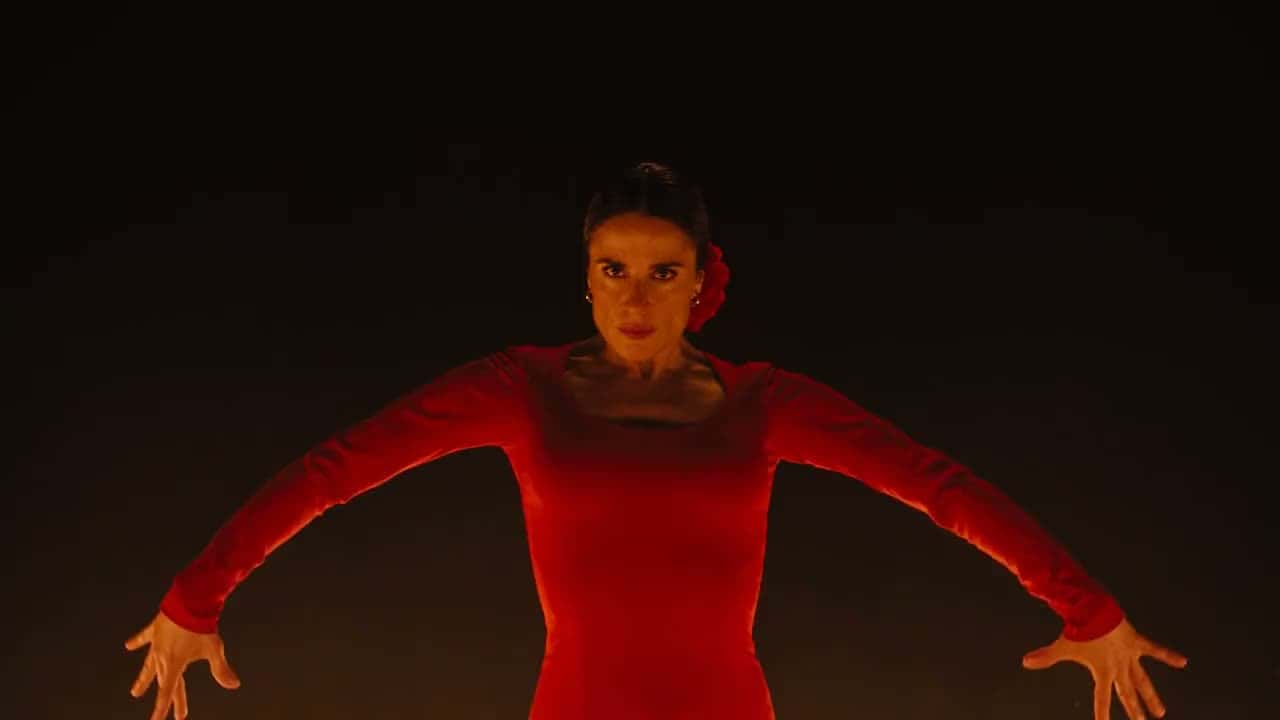
Seedance 2.5 still generated on Yovid

The Yovid way

Yovid does not train custom models; instead, Seedance 2.5 accepts reference pictures, clips and audio in each run to help hold a character or product steady.

Open Seedance 2.5
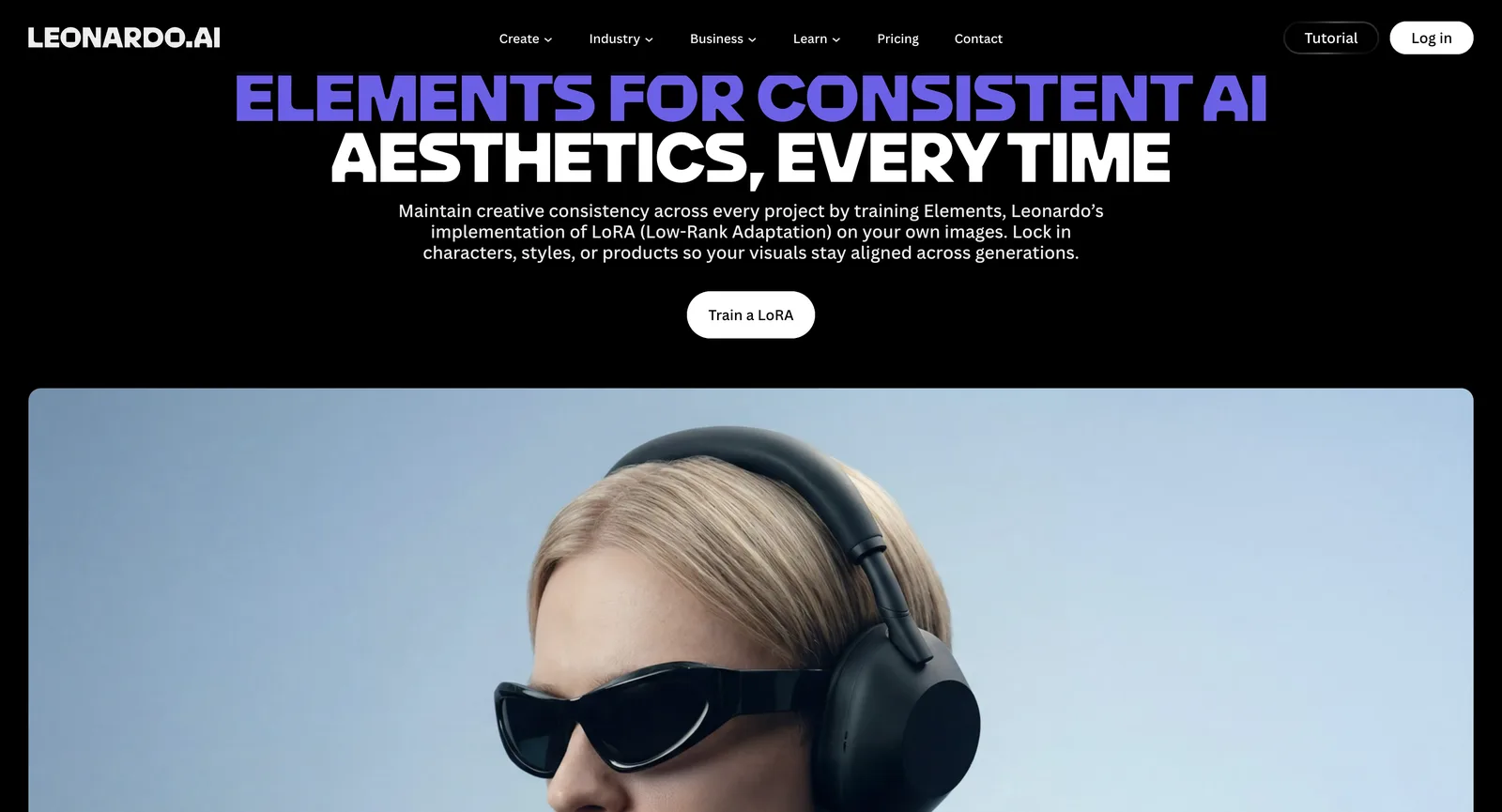
Elements page on leonardo.ai, signed out, about keeping AI looks consistent through LoRA training, with a button that starts a training run
Captured from leonardo.ai/element-training while signed out, October 16, 2026.

Who Runs Leonardo AI and Where It Fits

The company behind Leonardo.Ai is Leonardo Interactive Pty Ltd of Australia. Its Terms of Service, last revised on January 19, 2026, list it as the party you sign up with and tie late-payment interest to the Reserve Bank of Australia cash rate. Canva announced on July 29, 2024 that it was buying Leonardo and that the web product would keep developing on its own; a Canva login now works for Leonardo accounts.

Its roots are in-house image models, and images remain the core. Phoenix, Lucid and Motion are Leonardo’s own; newer outside models such as Seedance 2.5, Kling, Sora 2, Veo 3.1, Nano Banana and GPT-Image-2 are reached through external APIs and paid for in tokens. The iOS listing speaks of a community of more than 60 million creators.

Yovid is independent and leans toward video: one composer for Seedance, MiniMax H3, Kling, Wan and Veo, image models led by Seedream 5.0, GPT Image 2.5 and Nano Banana, an AI Canvas, image and video upscalers and a REST API, with credit prices on screen and packs you pay for once.

Who Leonardo AI Suits Best

Leonardo’s industry pages and toolset point at the groups below. Image-heavy work that needs a trained style plays to its strengths; if you mostly make clips, a video-led generator may serve you better.

Game and concept artists

Sketch out characters and worlds in Flow State, and later train an Element so one hero or art style carries through the whole project.

Marketing and social teams

Turn out banners, product visuals and social posts from Blueprints, then adjust them in Omni or resize a whole batch at once.

Print-on-demand sellers

Create designs, cut out backgrounds to get transparent PNGs, and push the files up to print resolution with the Universal Upscaler.

People who already design in Canva

Log in with a Canva account and send upscaled images straight into Canva for layout.

Video makers watching their tokens

Bring prompts or stills to life with Leonardo’s Motion models, or sample Seedance, Kling and Veo out of the same balance.

Developers

Reach image, video, audio and 3D models through one usage-billed API whose credit never expires.

Leonardo AI on Trustpilot and the App Store

Leonardo.Ai has claimed its Trustpilot profile, scores 4.7 there and answers most critical reviews. We read all 184 reviews rated one to three stars, in any language, plus the latest 160 English reviews with four or five stars, and noted the US App Store score. A striking share of recent five-star reviews credit a specific support person by name for sorting out a billing or account problem, rather than talking about the generator; the low scores take aim at the generator and at how tokens work. Each theme links to sample reviews, and a single review may feed more than one theme.

Trustpilot

4.7 / 5

1,529 reviews · 1,313 at five stars and 145 at one; claimed profile that answers 77% of negative reviews

Open the source

US App Store

4.8 / 5

11K ratings · listed as Leonardo.Ai - Image Generator, developer Leonardo Interactive Pty Ltd

Open the source
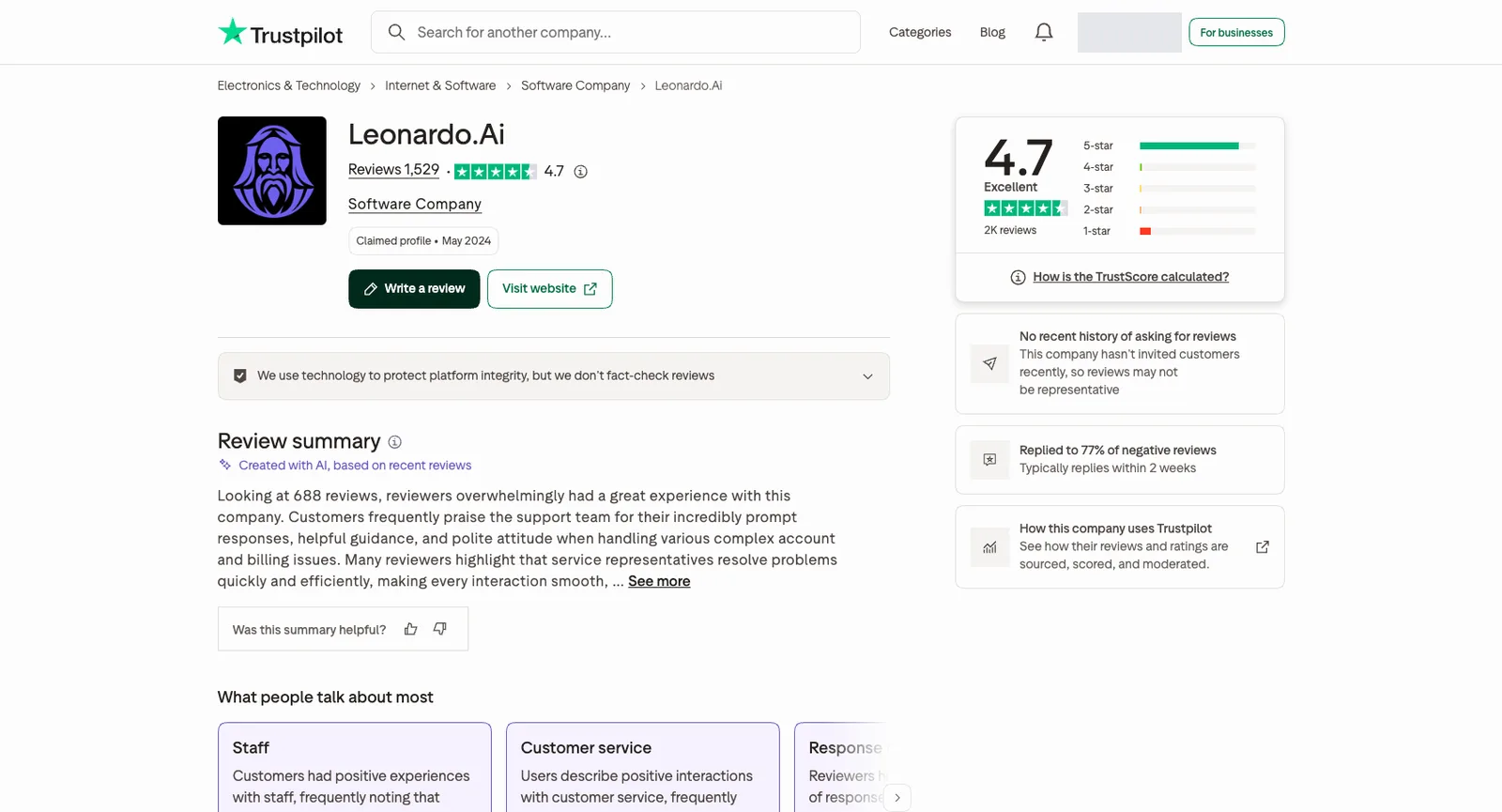
Trustpilot profile of Leonardo.Ai: a 4.7 TrustScore over 1,529 reviews, a claimed badge, and a note that 77% of negative reviews got a reply
Captured from trustpilot.com/review/leonardo.ai while signed out, October 16, 2026.

Praise that keeps coming up

  1. 01

    Quick, personal help with billing

    Recent five-star reviews mostly praise support: an agent who replied within hours, refunded a renewal the customer did not want, or corrected a billing mistake on the same day.

  2. 02

    A deep toolbox behind one login

    Long-standing subscribers like the sheer number of models and settings, regular feature releases and, ever since rollover was introduced, monthly tokens that carry forward instead of disappearing.

Recurring complaints

  1. 01

    Ordinary prompts stopped by filters

    The product complaint we saw most often: requests reviewers consider harmless, rejected with vague safety messages. One reviewer guessed that about three prompts in four were refused.

    How Yovid handles it

    On Seedance models, Yovid’s relaxed content mode retries a falsely blocked prompt for 10% more credits; banned content is still refused and a pass is not guaranteed. Kling, Veo, Wan and the other models sit in the same composer if one refuses.

  2. 02

    Token balances wiped on cancelling or changing plan

    Subscribers say cancelling, pausing or a renewal stripped large balances, from a few thousand up to 60,000 tokens. According to the FAQ, top-up tokens are usable only during an active subscription.

    How Yovid handles it

    Yovid packs from $29.90 are paid once and never renew, so no subscription has to stay active; Starter credits last 180 days and the larger packs a full year.

  3. 03

    Tokens charged for errors and missed prompts

    Runs that crash with an error yet still deduct tokens, outputs that disregard the prompt, and no tokens handed back when reviewers asked.

    How Yovid handles it

    Yovid shows the credit price before every run and gives the credits back when a run fails. A finished clip you dislike is still charged, so test new prompts at short lengths and lower resolutions first.

  4. 04

    Renewals after cancelling and refunds denied

    Charges that arrived after a confirmed cancellation, billing that ran on for months, and refund requests turned down even with tokens untouched. Nothing in Leonardo’s terms promises a refund window when you simply cancel.

    How Yovid handles it

    Yovid publishes one rule: ask within 3 days of a purchase, packs included, and if none of its credits have been spent you get the money back minus payment fees (at most 4% + $1.50). Automatic renewals are not refundable.

We read these ratings and reviews on October 16, 2026. Leonardo.Ai has claimed the Trustpilot profile and replies to the bulk of negative reviews, and Trustpilot listed no recent review invitations from the company. The App Store figure covers the US store only. We summarize instead of quoting; follow each link for the reviewer’s own words.

Leonardo AI Plans and Prices in 2026

Besides a free tier, Leonardo sells three personal subscriptions you can pay monthly or yearly, along with team plans and a usage-billed API. Every plan boils down to a monthly token allowance, and every model charges a different number of tokens. Below, its plans sit beside Yovid’s.

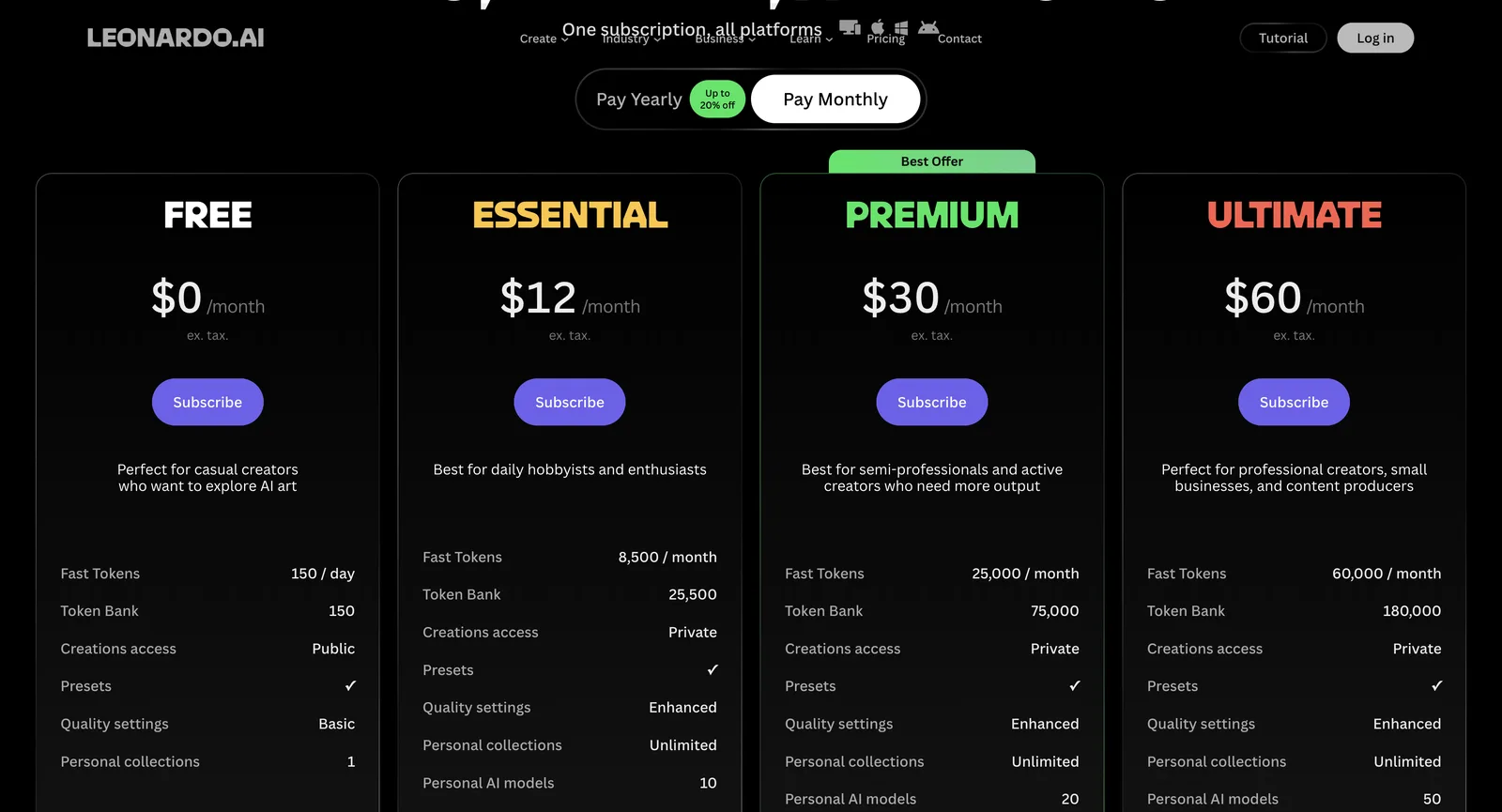
leonardo.ai pricing on Pay Monthly: Free at $0, Essential at $12, Premium at $30 and Ultimate at $60 a month excluding tax, each with its fast-token allowance
Captured from leonardo.ai/pricing while signed out, October 16, 2026.
FreeLeonardo AI150 fast tokens every day; creations are public, Leonardo owns free users’ images and grants you a licence for commercial useYovidFree starter credits after registering, no card needed; entry models only (Seedance 2.0 Mini and older), max 720p
Entry tierLeonardo AIEssential: $12 a month or $10 a month on yearly billing; 8,500 fast tokens monthly, a rollover bank of up to 25,500 tokens, private creationsYovidLite at $14.90 a month, or $13 a month paid yearly, for 100 credits a month. Every video model except MiniMax H3; Seedance renders at 720p, other models at up to 1080p. Commercial rights come with yearly billing only
Middle tierLeonardo AIPremium: $30 a month or $24 a month on yearly billing; 25,000 fast tokens monthly and unlimited relaxed images on selected modelsYovidPro at $29 a month, or $14.50 a month paid yearly, for 200 credits a month. Seedance at 1080p, other models at up to 2K, commercial rights included
Top tierLeonardo AIUltimate: $60 a month or $48 a month on yearly billing; 60,000 fast tokens monthly plus unlimited relaxed images and video on some models. Team seats start at $24 a monthYovidPremium at $149 a month, or $99 a month paid yearly, for 1,300 credits a month, output up to 4K and priority support
Seedance 2.5Leonardo AIOffered in the video editor and the API; missing from the relaxed list, so every run costs tokens, at a rate the plans page leaves blankYovidIncluded in every paid plan and every pack: clips run up to 30 s with sound rendered alongside, guided by reference pictures, clips or audio. Output is 720p on Lite and 1080p on Pro, Premium and packs
Unlimited videoLeonardo AIUltimate and team plans only, as relaxed video on a few models: Motion, Wan 2.6, Hailuo 2.3 and MiniMax H3 at 480pYovidPremium only: one 7-day window per account of free Seedance 2.5 and 2.0 clips (10 s max, up to 1080p), in a free queue
Unlimited imagesLeonardo AIPremium and above: relaxed images on its in-house Phoenix, Lucid Realism and Lucid OriginYovidPro and Premium: a year of unlimited images on the supported image models
Credits without a planLeonardo AITop-up tokens need an active subscription; only the API is billed per useYovidPay-once packs from $29.90 for 200 credits up to $999 for 8,000, no renewal, commercial rights included
RefundsLeonardo AINo refund window: a cancellation takes effect when the paid period ends; pro-rata refunds only when you cancel because the terms changedYovidRefundable within 3 days of buying (packs too) if none of that order’s credits were spent; payment fees (max 4% + $1.50) are kept, and automatic renewals cannot be refunded

Leonardo AI figures come from leonardo.ai/pricing and its Terms of Service as read on October 16, 2026, in USD, excluding tax; yearly prices are monthly equivalents charged once a year. Relaxed jobs get lower priority, so they may take longer when the service is busy. Yovid figures match yovid.ai/pricing.

Leonardo AI, Yovid and Higgsfield Compared

Each starts from a different place: Leonardo AI began as an image studio and bolted on video, Yovid is a multi-model generator for video and images with prices shown up front, and Higgsfield wraps many models in its own film-style studio tools.

Built aroundLeonardo AIImage studio at heart: Lucid and Phoenix for stills, Omni editing, Flow State, LoRA Elements, Motion for video, an upscaler and an APIYovidOne composer for Seedance, MiniMax H3, Veo, Wan, Kling and image models, plus AI Canvas and upscalersHiggsfieldHosted models from many labs, with an agent, AI Influencer, Genjutsu and Cinema Studio
Seedance 2.5Leonardo AIInside the video editor and the API; always costs tokens, at an unpublished rateYovidLite and up: clips to 30 s with sound, 720p on Lite and 1080p on Pro, Premium and packsHiggsfieldPlus and up; Starter only gets the Mini and Fast versions of Seedance 2.0
Other video modelsLeonardo AIIts own Motion plus LTX-2, MiniMax H3, Wan, Hailuo 2.3, Kling 3.0 Turbo, Sora 2 and Veo 3.1YovidMiniMax H3, Wan 3.0, Veo 3.1 and Kling 3.0HiggsfieldGrok, Hailuo, Wan, Veo, Sora, Kling and in-house models
Unlimited videoLeonardo AIRelaxed video on Motion, Wan 2.6, Hailuo 2.3 and MiniMax H3 at 480p, Ultimate and team plans onlyYovidPremium: one 7-day window per account of free Seedance 2.5 and 2.0 clipsHiggsfieldPlus and Ultra: 7 days of Wan 3.0 and Kling 3.0; business plans add Seedance 2.5
Credits without subscribingLeonardo AINo: top-ups need a live subscription; the API is billed per useYovidYes: packs from $29.90, usable for 180 days to a yearHiggsfieldNo: subscriber-only packs that last 90 days
Refund windowLeonardo AIIts terms set none; cancelling only stops the next renewalYovidWithin 3 days of a purchase if none of its credits were spent; renewals excludedHiggsfieldFirst purchase only, within 7 days and with no credits used

Leonardo AI details come from its product, pricing and terms pages as read on October 16, 2026; Higgsfield details were read on October 14, 2026.

Why Some Leonardo AI Users Move to Yovid

Switchers tend to make more video than stills, or want to pay for generation with no subscription to keep alive.

  1. 01

    Credits that outlive a subscription

    Packs start at $29.90, are paid once, stay usable for 180 days to a year and include commercial rights and 1080p Seedance. Leonardo’s top-up tokens stop working once you stop subscribing, and reviewers describe balances vanishing when they cancelled.

  2. 02

    Video models from the entry plan

    Lite ($13 a month paid yearly) already runs Kling, Veo and Seedance 2.5, along with every other video model except MiniMax H3, and the credit cost appears before you generate. Leonardo does not publish its per-model video token rates on the plans page.

  3. 03

    A free Seedance week on Premium

    Premium ($99 a month paid yearly) includes one 7-day window per account of free Seedance 2.5 and 2.0 clips, as many as 11 ten-second clips at 720p, and failed runs cost nothing. On Ultimate, Leonardo’s relaxed video reaches Motion, Wan, Hailuo and MiniMax H3 at 480p, but not Seedance.

When Leonardo AI is still the better call

  • Your work is mostly images and you want unlimited relaxed output on Phoenix or Lucid.
  • Trained Elements, Omni edits, Flow State or the Universal Upscaler (105 megapixels) are part of your routine.
  • You design in Canva, or you build on Leonardo’s API and value credit that never expires.

More Leonardo AI Alternatives Worth a Look

Eight other tools to shortlist. The starting price on each card is the cheapest paid plan, before tax, as its own pricing page showed it on October 13, 2026. Plans buy very different amounts of output, so weigh them against your own workload rather than by headline price.

Higgsfield

Hosts outside models next to in-house tools (Soul images, Ads Studio, Cinema Studio, AI Influencer), offers team plans and prices Seedance 2.0 and Kling 3.0 per 5-second block.

Pick it for: Its in-house studios, or cheap Kling 3.0: roughly 7 credits buys 5 seconds at 720p.

Skip it for: Full Seedance on a budget: the Starter tier stops at Seedance 2.0 Fast and 2.0 Mini.

Cheapest paid plan: Starter at $19 a month (same monthly or yearly) for 270 credits; the free tier just says “Limited use”.

Read our Higgsfield breakdownTheir pricing page

Pollo AI

A marketing-minded hub: dozens of third-party models plus its own Pollo models, template apps, an agent, Marketing Studio, an MCP server, an API and phone apps.

Pick it for: Maximum model choice; while its 60% subscriber discount lasts, its Seedance clips cost less than Yovid’s on most plans.

Skip it for: Buying credits with no subscription, or keeping unused plan credits: they lapse each cycle.

Cheapest paid plan: Lite at $15 a month, $12 paid yearly, for 400 credits.

Read our Pollo AI breakdownTheir pricing page

Runway

Built around Runway’s in-house Aleph, Act-Two and Gen-4.5, adding sound effects, voices and music, upscaling to 4K, and guest models like Kling and Seedance.

Pick it for: Projects where editing matters as much as generating.

Skip it for: Lots of clips on the cheapest tier: Runway itself says the 625 Standard credits buy roughly 52 s of Gen-4.5 output.

Cheapest paid plan: Standard at $15 a month, $12 paid yearly, for 625 credits; the free plan gives 125 credits once.

Their pricing page

Kling AI

Kuaishou’s own app for Kling, including Kling 3.0 Omni and 3.0 with sound, Motion Control, 4K video and a developer platform.

Pick it for: Kling-only users who want to buy straight from the model maker.

Skip it for: Anyone who needs Seedance, which appears on neither its pricing page nor its home page.

Cheapest paid plan: Standard: $6.99 for month one, $8.80 a month after that or $79.20 a year, with 660 credits a month.

Their pricing page

Hailuo AI (MiniMax)

MiniMax’s first-party app for Hailuo and MiniMax H3, with Hailuo Agent and Omni Reference (as many as 12 reference images); paid tiers also unlock Sora 2 and Veo 3.1.

Pick it for: People who like MiniMax’s models and per-second pricing.

Skip it for: Seedance work: no Seedance model is listed for sale, and trial credits only run Hailuo models.

Cheapest paid plan: Standard at $10.50 a month on sale that day, or $8.40 paid yearly, for 1,000 credits.

Their pricing page

Luma Dream Machine

Home of Ray3.2 for video and Uni-1 for images, Luma Agents and connectors for tools like Frame.io and Figma; its credit table also prices Seedance 2.0 Mini, 2.0 and 2.5.

Pick it for: Design teams after Ray3.2 output and agents inside the tools they already use.

Skip it for: Low-cost testing: no free plan is listed and the cheapest tier is $25 a month.

Cheapest paid plan: Plus at $30 a month, $25 paid yearly, for 10,000 credits with commercial use.

Their pricing page

PixVerse

Runs PixVerse’s V6 (with native audio) and real-time R2, plus Lip Sync, Canvas, Agent and an API; the two newest Seedance versions unlock from the Pro tier.

Pick it for: Fast social clips on free daily credits: 60 at sign-up, then 30 a day, capped at 540p.

Skip it for: Cheap Seedance: the Standard tier only runs PixVerse models and maxes out at 720p.

Cheapest paid plan: Standard at $10 a month, $8 paid yearly, for 1,200 credits per 30 days plus 60 daily.

Their pricing page

Vidu

Vidu’s in-house Q3 and Q4 plus real-time Vidu S, with a developer API, Vidu Agent and Reference to Video.

Pick it for: Reference-driven clips on Vidu models; on paid tiers Q4 at 540p uses 2 credits per second.

Skip it for: Seedance, which its pricing page does not offer.

Cheapest paid plan: Standard at $10 a month, $8.25 paid yearly, for 800 credits.

Their pricing page

Questions People Ask

Straight answers on Leonardo AI, based on what we checked on October 16, 2026.

What do people use Leonardo AI for?
Mostly for making and retouching images: characters, concept art, print designs, product shots and marketing graphics, on Leonardo’s Lucid and Phoenix models, or on partner models like Nano Banana and GPT-Image-2. It also generates short videos, lets you train LoRA styles it calls Elements, upscales to as much as 105 megapixels and has an API.
Is Leonardo AI legitimate?
Yes. Leonardo Interactive Pty Ltd, based in Australia, runs it, and Canva has owned it since July 2024. When we checked on October 16, 2026, its claimed Trustpilot page read 4.7 over 1,529 reviews, and the US App Store showed 4.8. The one-star reviews center on strict filters, wiped token balances and refund refusals. Keep in mind that free-tier creations are public and the terms allow Leonardo to use public content.
Can you use Leonardo AI for free?
Yes, within limits. The free plan refills 150 fast tokens each day, keeps your creations public and holds quality settings at Basic. The cheapest subscription, Essential, costs $12 a month or $10 a month on yearly billing for 8,500 tokens, before tax.
Will Leonardo AI refund a subscription?
Usually not. Its Terms of Service give no refund window for an ordinary cancellation: a cancellation made in your account only takes effect when the current billing period ends, and you keep paying until that point. Pro-rata refunds only apply if you leave over a change to the terms or if Leonardo withdraws something you already paid for. Consumer law where you live may give you more.
Are Leonardo AI generations unlimited?
Only in the slower relaxed lane, and only for some models. Premium unlocks relaxed images on Leonardo’s in-house models; Ultimate and the team plans extend that lane to video on Motion, Wan 2.6, Hailuo 2.3 and MiniMax H3 at 480p. Partner models such as Seedance, Sora, Kling and Veo charge tokens every time.
Which Leonardo AI alternative is better for video?
If video matters more than stills, Yovid: Seedance 2.5 on every paid plan alongside MiniMax H3, Veo, Wan and Kling, each run priced before you start, and credit packs from $29.90 with no subscription. If you also want film-style studio tools, Higgsfield is the nearest multi-model option.
Does Yovid have any link to Leonardo AI or Canva?
No. Yovid is an independent multi-model platform. Leonardo.Ai and Canva belong to their owners, and Seedance is ByteDance’s model; the names appear here only so the products can be described and compared.

More clips than stills lately? Put your idea in motion