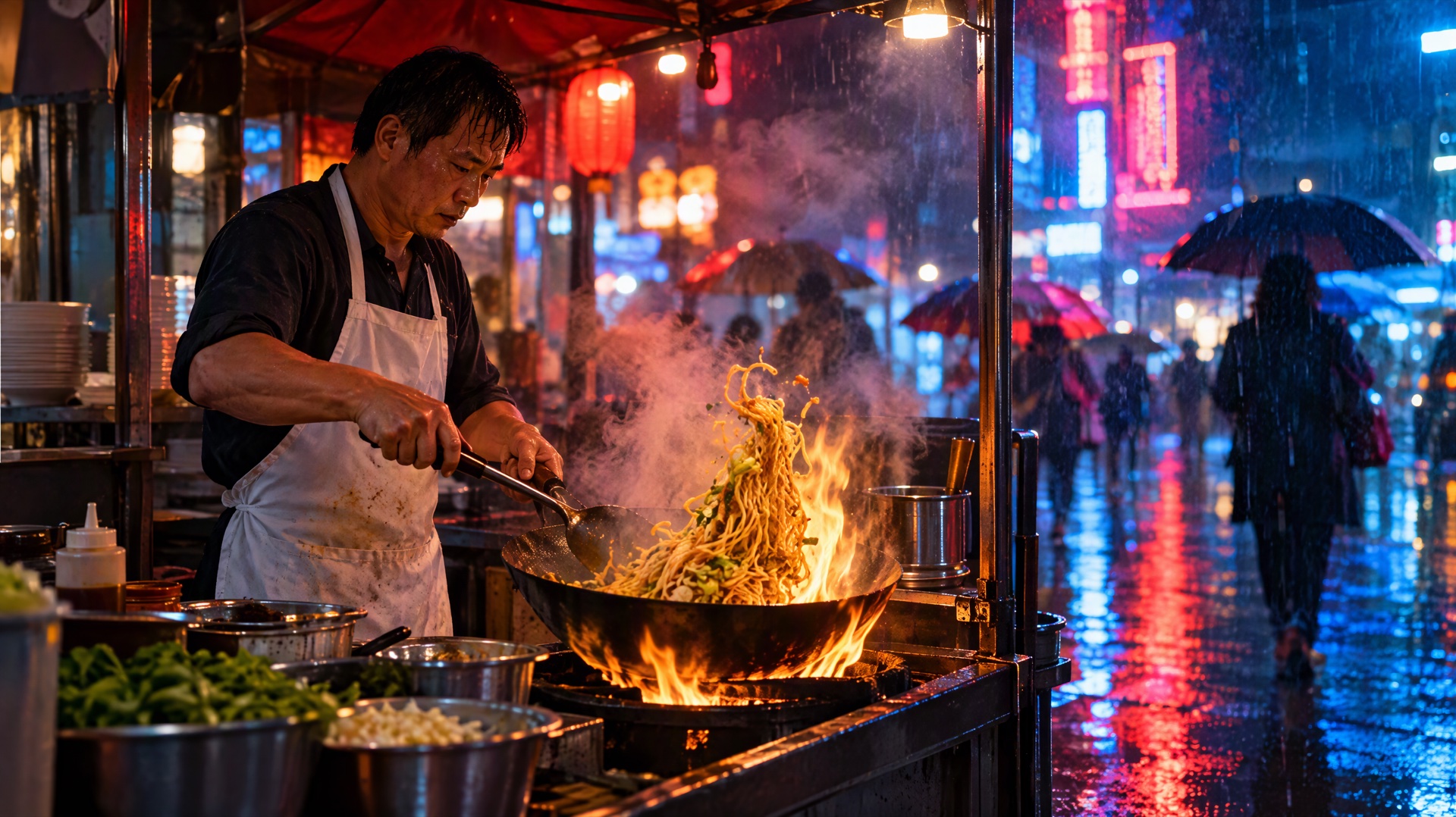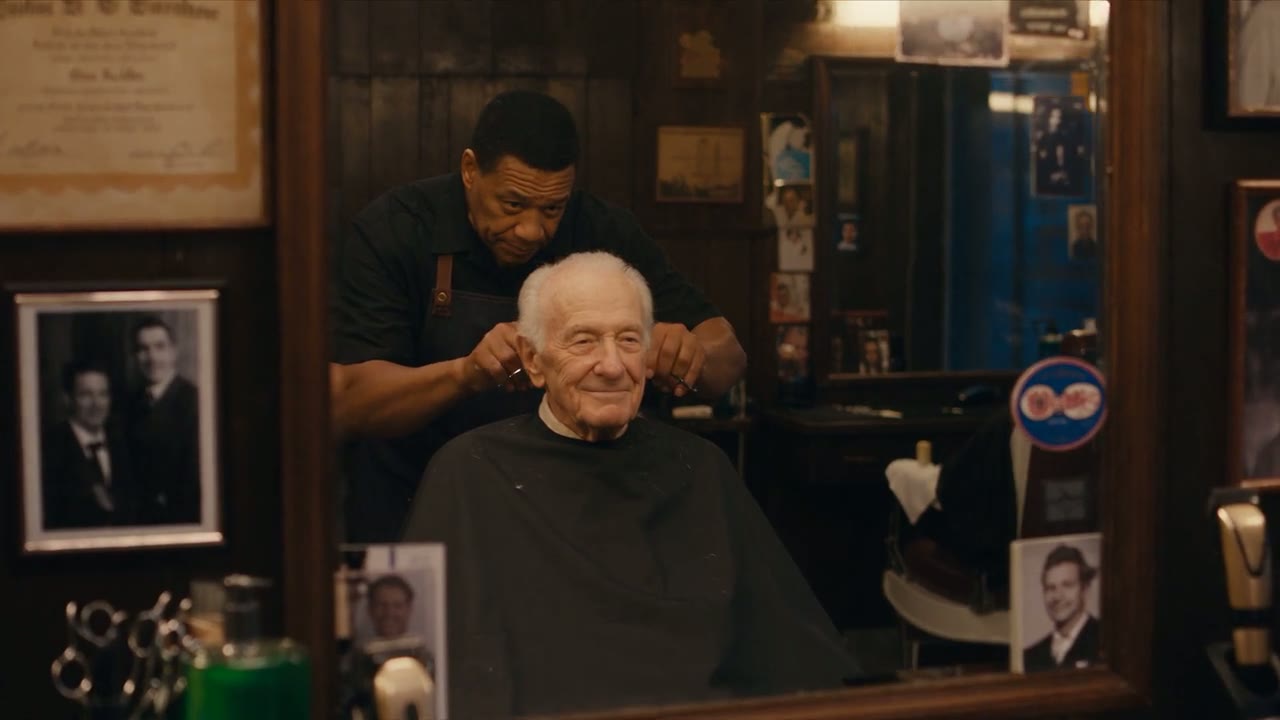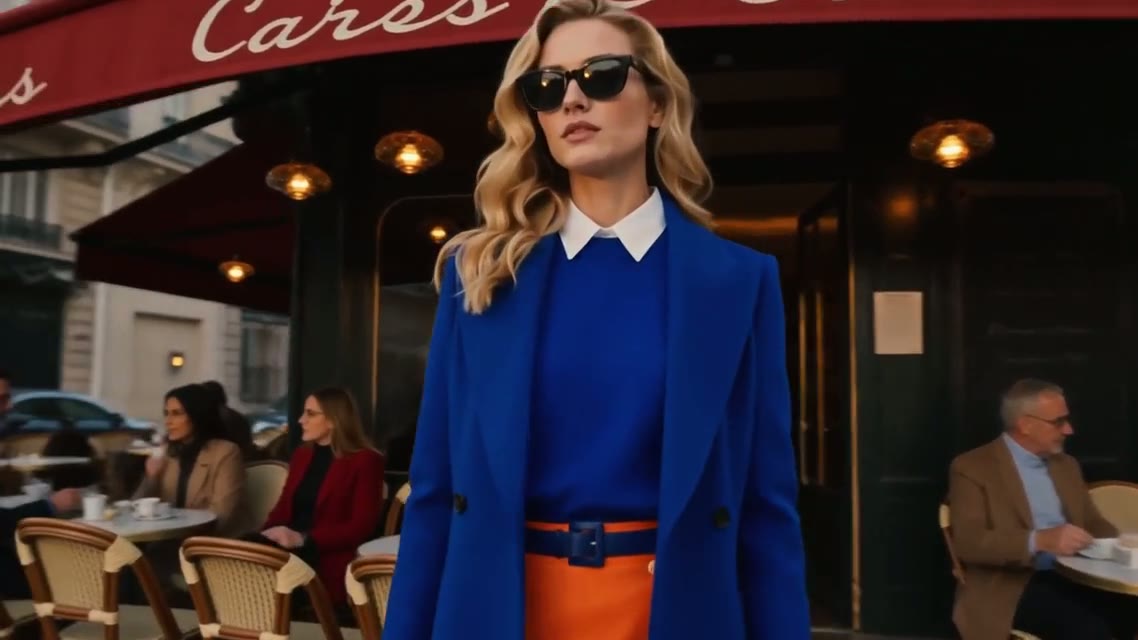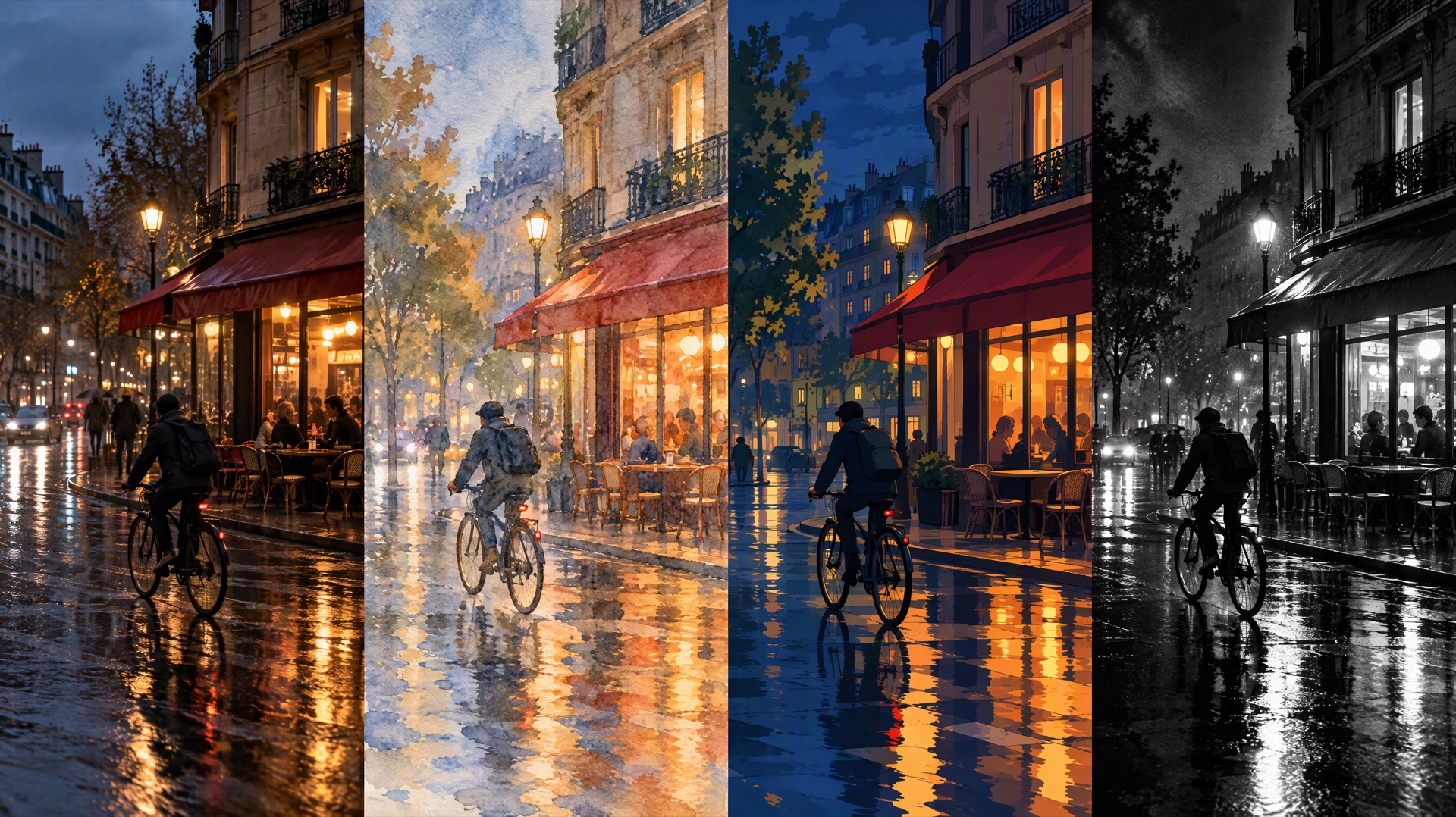

Direct answer: To get spoken dialogue from Seedance 2.5, write every line inside quotation marks and put four things around it: who says it, which language and accent, the tone, and when it happens in the clip. A working line looks like this: The woman says quietly in French, "On rentre ?". Keep the dialogue short enough to fit the clip, about two to three words per second of video, and give each speaker a visible action between lines. Seedance 2.5 generates the voice and the picture in the same pass, and Sound is on by default on Yovid. ByteDance has not published a list of speech languages, so "any language" here means you write the language you want and test it. Its own demos show English, French and Chinese. The 15 prompts below cover monologues, two-person scenes, ads, short drama and five languages, plus two 30-second timed scripts.
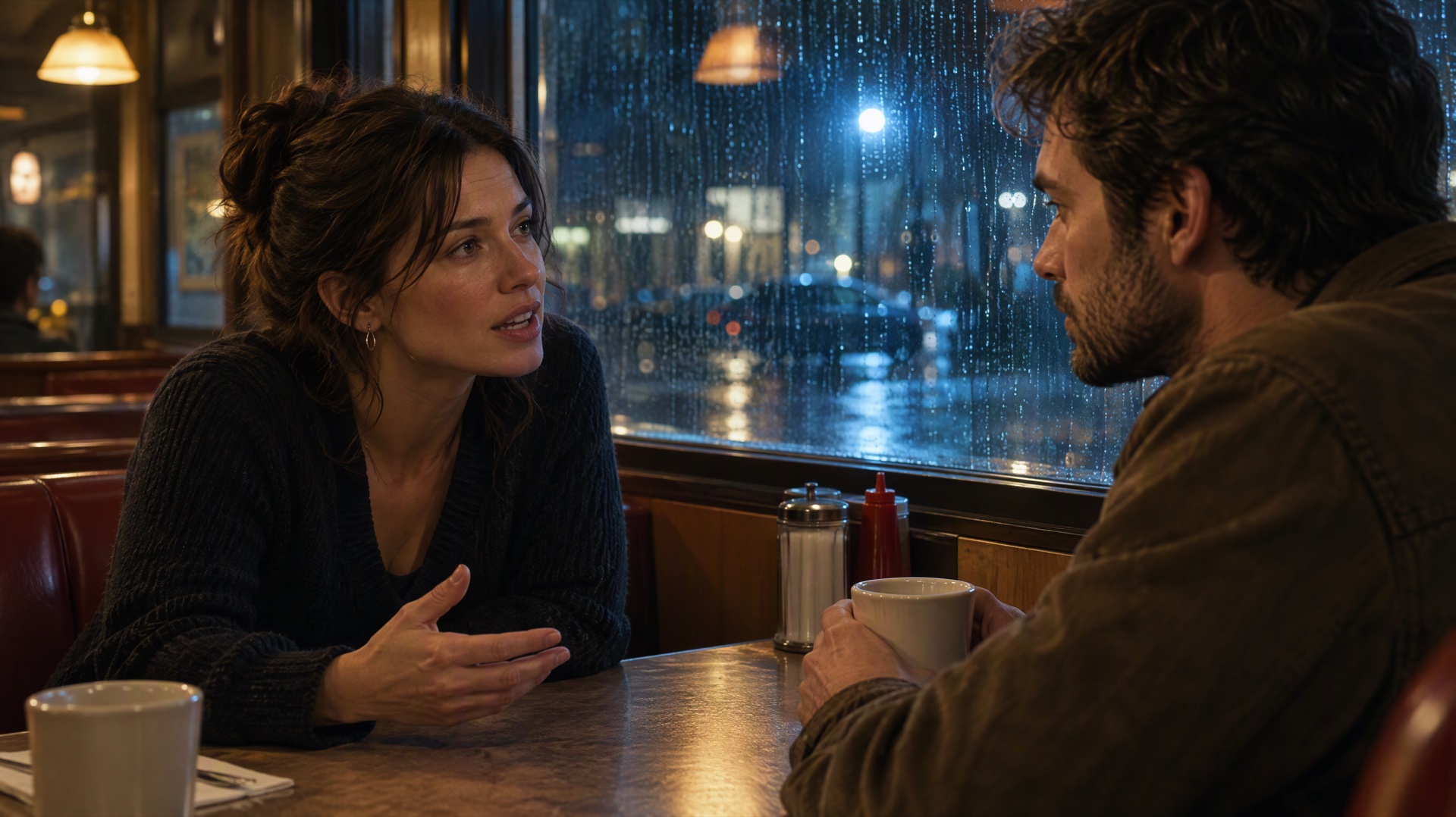
Image prompt: Cinematic film still of two adults in their thirties talking across a booth in a quiet late-night diner. The woman on the left leans forward mid-sentence with an open, earnest expression, the man on the right listens holding a coffee mug. Warm tungsten light inside, rain streaks on the window, blue street light outside, shallow depth of field, natural skin texture, 35mm look.
Last verified: 2026-10-28
Contents
- How Seedance 2.5 handles dialogue
- The dialogue prompt formula
- 15 copy-ready dialogue prompts
- Two 30-second timed dialogue prompts
- How to fix common dialogue problems
- FAQ
How Seedance 2.5 handles dialogue
ByteDance describes Seedance 2.5 as an audio-video joint generation model. In practice that means speech, ambience and sound effects come out of the same generation as the picture. You don't record a voice track and sync it later; the prompt is the script.
What matters for dialogue on Yovid:
| Setting | What it means for dialogue |
|---|---|
| Sound | On by default. Turn it off and you get a silent clip, so no speech at all. |
| Length | 4 to 30 seconds per generation. Longer clips leave room for an exchange instead of a single line. |
| Resolution | 480p, 720p or 1080p. The Lite plan stops at 720p for Seedance 2.5. |
| Aspect ratio | 16:9, 9:16, 1:1, 4:3, 3:4 or 21:9. Use 9:16 for vertical ads and short drama. |
| Prompt length | Up to 10,000 characters, which is plenty for a 30-second script. |
| Access | Any paid plan or any credit pack. Free sign-up credits don't cover Seedance 2.5. |
At credit-pack base rates a 10-second 720p clip costs 61 credits and a 30-second one costs 183. Subscriptions pay less per second, and the Generate button shows the exact cost before you start. Plan and pack prices are on the pricing page. If you plan several takes of the same scene, Seedance 2.5 draft mode lets you check timing at 480p first.
Two limits to keep in mind. ByteDance's showcase includes English lines, a French exchange in a pharmacy and a Chinese line in a family kitchen, but it doesn't list every language the model can speak. And lip sync is generated, not guaranteed: mouths usually follow the words better when the speaker faces the camera and the line is short, so check close-ups before you publish.
The dialogue prompt formula
Write each spoken line as one sentence with five parts in a fixed order:
Speaker + delivery + language and accent + "the line" + what they do next
For example: The older man says slowly, in English with a soft Irish accent, "You kept the key." He sets it on the table.
- Speaker. Name the person by something you can see: "the woman in the yellow raincoat", "the taller chef". The model has to know which mouth moves.
- Delivery. One or two words for tone and volume: whispered, flat, laughing, close to tears.
- Language and accent. Say it even for English. "In French", "in Spanish with a Mexican accent", "in Mandarin Chinese".
- The line in quotes. Write it in the target language, in that language's script. Don't translate it in brackets; the model may read the translation aloud.
- The next action. A glance, a pause, a step back. It gives the shot something to do while the other person answers.
Then fit the amount of speech to the clip. Natural conversation runs at roughly two to three words per second, and a scene also needs time for reactions:
| Clip length | Speech that fits | Good for |
|---|---|---|
| 5 seconds | One line of up to 10 words | A reaction, a punchline, a slogan |
| 10 seconds | Two or three short lines | A question and an answer |
| 15 seconds | Three or four lines | A short exchange with one beat of action |
| 30 seconds | Six to eight lines, split into timed beats | A full mini scene |
One speaker
Monologues are the most reliable dialogue shot. Keep the speaker in a medium shot or closer, facing the camera or at a slight angle, and describe the background sound so the voice sits in a real space.
Two speakers
Describe both characters once at the start, with clothing or position that tells them apart. Then attribute every line, even short ones. "She answers" is enough; a bare quote with no speaker is where voices get swapped.
Three or more speakers
Three voices in one clip is possible, but each extra speaker raises the chance that lines land on the wrong face. Give each person a fixed place in the frame (left, center, right), keep the lines short, and let only one person talk at a time. For longer group scenes, split the dialogue into timed beats.
15 copy-ready dialogue prompts
All prompts are in English, with the spoken line in its own language. Each card has a button that opens the prompt in the Yovid generator with Seedance 2.5 selected; check that Sound is on, then set length and aspect ratio. You can also paste them into the text-to-video generator yourself.
Solo monologues
1. Night-shift nurse, 10 seconds
A 10-second medium close-up of a tired nurse in her forties in blue scrubs, sitting on a bench in an empty hospital corridor at night. She rubs her eyes, looks up at the camera and says quietly in English, "Twelve hours, and the coffee machine is still broken." She lets out a short laugh. Fluorescent hum, a distant monitor beeping, soft cool light.
2. Mountain guide at sunrise, 10 seconds
A 10-second shot of a weathered mountain guide in his fifties wearing a red jacket on a rocky ridge at sunrise. He turns to the camera and says calmly in English with a Scottish accent, "Slow steps from here. The wind does the rest." Wind gusting over the mic, loose stones underfoot, golden light on his face, slow push in.
3. Stage actor before the curtain, 15 seconds
A 15-second close-up of a young actress in a plain black dress standing alone on a dark stage under a single spotlight. She takes a breath, her voice shaking at first, and says in English, "I said I would leave. I never said I would forget." She pauses, steadies her chin, then says firmly, "Tonight I do both." Silent theater, the faint creak of the floorboards, slow push in to an extreme close-up.
Two-person conversations
4. Diner booth at midnight, 15 seconds
A 15-second scene in a late-night diner booth, rain on the window. A woman in a dark knit sweater leans toward a bearded man holding a coffee mug. She says in English, quietly but sharply, "You could have called." He looks down at the mug and answers flatly, "I know." She waits, then says more softly, "So why didn't you?" He looks up at her without speaking. Low jukebox music, rain tapping the glass, slow alternating close-ups.
5. Moving day in an empty flat, 10 seconds
A 10-second scene in an empty apartment full of cardboard boxes, afternoon sun through bare windows. A young man taping a box looks up at his sister in the doorway and says in English, in a tired but happy voice, "That's the last one." She smiles and answers, "Then let's go before I start crying." Tape screech, echo in the empty room, handheld medium shot.
6. Two chefs before service, 15 seconds
A 15-second scene in a busy restaurant kitchen before dinner service. A tall head chef in a white jacket tastes a sauce from a spoon and says to the shorter sous chef on his left, in English with a London accent, "More salt. And taste it before you send it." The sous chef nods fast and says, "Yes, chef." Pans sizzling, extractor fans roaring, steam rising, tracking shot along the pass.
Ad voiceovers and spokesperson lines
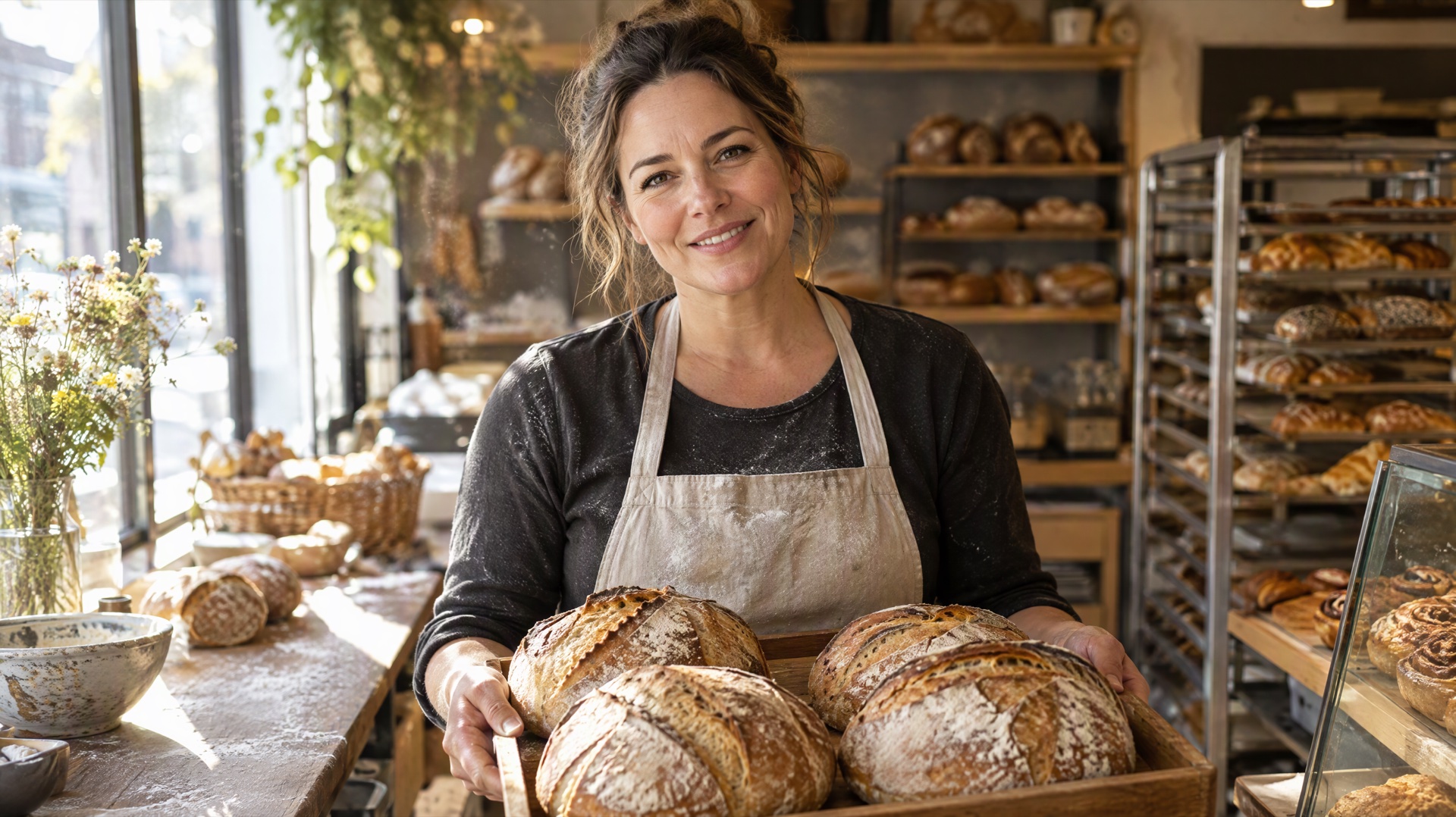
Image prompt: Cinematic photograph of a friendly baker in her forties standing behind the counter of a small neighborhood bakery, speaking directly to the camera while holding a wooden tray of fresh sourdough loaves. Soft morning window light, flour dust in the air, warm golden tones, shallow depth of field, natural candid expression.
7. Bakery owner to camera, 15 seconds, vertical
A 15-second vertical 9:16 ad in a small neighborhood bakery in morning light. The baker, a woman in her forties with a flour-dusted apron, holds a tray of sourdough loaves and speaks to the camera in a warm, friendly tone in English: "We start at four every morning, so you don't have to. Fresh bread until noon, every day." She sets the tray down and smiles. Oven door closing, light chatter, slow push in.
8. Product voiceover with no face on screen, 10 seconds
A 10-second product shot of a matte green water bottle on a wet stone surface beside a mountain stream, water drops sliding down its side, slow orbit around the bottle. A calm male voiceover says in English, "Cold for a day. Light enough to forget it's there." No one on screen, no music, only the stream and the voice.
Short drama scenes
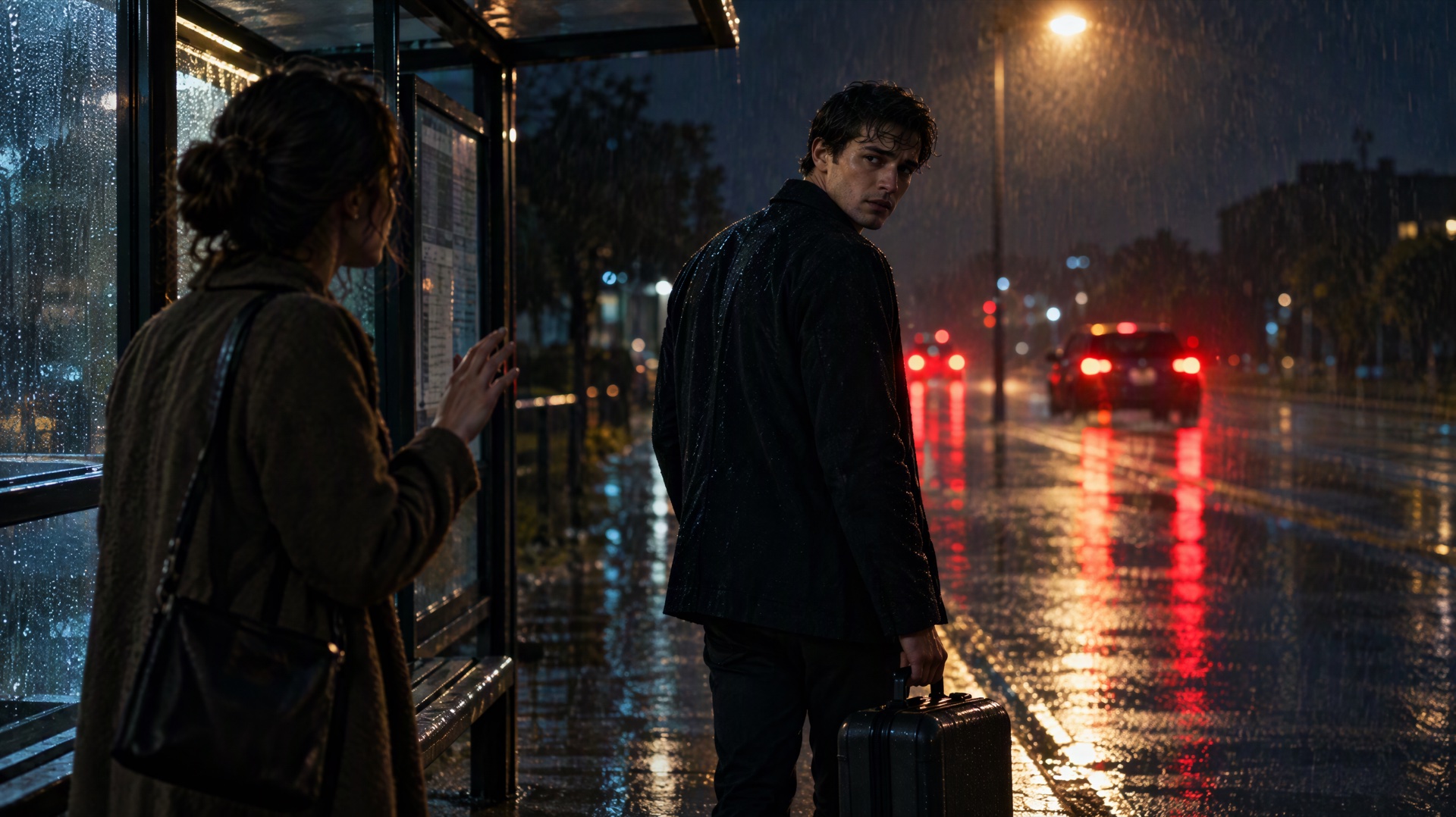
Image prompt: Cinematic film still of two young adults at a rainy bus stop at night. A man holding a small suitcase turns back toward a woman under the shelter who has just called after him. Wet asphalt reflecting red tail lights and a single streetlamp, rain falling in the light, tense emotional moment, anamorphic look, shallow depth of field.
9. Rainy bus stop, 15 seconds, vertical
A 15-second vertical 9:16 short drama scene at a rainy bus stop at night. A young man with a small suitcase walks away from the shelter. A woman in a long coat calls after him in English, her voice breaking, "If you get on that bus, don't call me." He stops in the rain, turns his head and says quietly, "I was going to ask you to come." Heavy rain, a bus engine approaching, red tail lights on wet asphalt, slow push in on his face.
10. The wrong envelope, 10 seconds
A 10-second short drama scene in a bright office meeting room. A woman in a gray blazer opens an envelope, reads it and freezes. Her colleague across the table asks nervously in English, "Is it the promotion?" She looks up slowly and says, "It's your resignation letter. Signed." Air conditioning hum, paper rustling, quick cut to his shocked face.
Multilingual dialogue
ByteDance's demos include English, French and Chinese speech. Spanish and Russian aren't in the showcase, so treat prompts 14 and 15 as tests: render a short clip at 480p or 720p before you commit to a long one.
11. English, Irish accent, 10 seconds
A 10-second scene in a cozy village pub with a fire burning. An elderly barman in a wool vest polishes a glass and says to a young traveler at the bar, kindly, in English with a soft Irish accent, "You'll not find the road in this fog. Stay for one more." The traveler laughs and sits back down. Crackling fire, low murmur of voices, warm amber light.
12. French, 10 seconds
A 10-second scene on a Paris cafe terrace at dusk, string lights overhead. A woman in a beige trench coat stirs her coffee and says to the man opposite her, in French, in a teasing tone, "Tu es encore en retard." He raises his hands and answers in French, "Le métro, comme toujours." She shakes her head and smiles. Street noise, cups clinking, medium two-shot.
13. Mandarin Chinese, 10 seconds
A 10-second scene in a small family kitchen at night, a pot steaming on the stove. A mother in her fifties in a cardigan turns from the stove and says softly in Mandarin Chinese to her grown son at the table, "饭快好了,先喝点汤。" He nods and answers in Mandarin Chinese, "好,妈。" Soup bubbling, a spoon against a bowl, warm overhead light, static medium shot.
14. Spanish, 10 seconds
A 10-second scene at a sunny outdoor fruit market. A cheerful fruit seller in her sixties with a straw hat holds up a ripe mango and says to a customer in Spanish with a Mexican accent, "Pruebe este, está dulcísimo." The customer takes a bite and answers in Spanish, "Tiene razón, me llevo tres." Market chatter, a radio playing faintly, handheld medium shot.
15. Russian, 10 seconds
A 10-second scene on a snowy railway platform in winter, steam rising from an old train. A grandmother in a fur hat hugs her grandson in a student coat and says in Russian, in a warm and slightly worried tone, "Позвони, когда доедешь." He smiles and answers in Russian, "Обязательно, бабушка." Train whistle, crunching snow, soft gray daylight, slow push in.
If a clip shows captions you didn't ask for, add "no subtitles, no on-screen text" at the end of the prompt.
Two 30-second timed dialogue prompts
Seedance 2.5 can render 30 seconds in one pass, and ByteDance's own long-take examples split the action by time. For dialogue that matters even more, because each beat tells the model when a line should start. Set the length to 30 seconds, then paste one of these. Each card shows the beats as a timeline.
16. Late-night radio host, one speaker
- 0–10sA cramped radio studio at 2 a.m., red ON AIR light glowing. A radio host in her thirties with headphones leans into the microphone and says in English, in a low warm voice, "If you're still awake, you're not alone. Lines are open."
- 10–20sShe reads a message on her screen, smiles and says, "Daniel from the night bus says hello to his driver." The camera slowly circles her desk, faders and coffee cups in the foreground
- 20–30sShe pushes a fader up as soft piano music begins and says, "Here's something quiet for the road home." Close-up on her face in the red light as the music rises
17. Two siblings sell the family shop
- 0–10sA dusty hardware shop at closing time, late sun through the front window. An older brother in a flannel shirt counts keys at the counter. His younger sister enters holding a folder and says in English, "The buyer signed this morning."
- 10–20sHe keeps counting and answers without looking up, "Dad built this counter himself." She puts the folder down beside him and says gently, "I know. That's why I wanted you to hear it from me."
- 20–30sHe stops, picks up one old brass key and hands it to her. He says quietly, "Keep this one." She closes her hand around it as the camera pulls back to a wide shot of the shop, the bell over the door ringing softly
For more on writing beats, references and edits, see the Seedance 2.5 prompt guide.
How to fix common dialogue problems
| Problem | Likely cause | Fix |
|---|---|---|
| Lips don't match the words | Speaker far away, turned away, or the line is too long | Medium shot or closer, face toward camera, shorter line |
| The language changes | No language named, or a translation in brackets | Name the language before every line, remove translations |
| Lines come from the wrong person | Quotes without a speaker, characters look alike | Attribute every line, give each person a distinct look and place |
| Two people talk at once | Lines too close in time | One line per beat, add an action between lines |
| The line is cut off | Too much speech for the clip | Fewer words or a longer clip |
| Music drowns the voice | Music requested or not excluded | Add "no music" or "music very low under the dialogue" |
Lips don't match
Most sync problems come from framing, not wording. A speaker in a wide shot or in profile gives the model little to work with. Move the camera to a medium shot or a close-up, keep the face toward the lens while they talk, and cut the line down. Two short sentences sync better than one long one. If one take is almost right, generate again with the same prompt before you rewrite it; results vary between runs.
The language switched
If you write She says, "Bonjour" without naming French, the model may treat the scene as English and change the words or the accent. Name the language before each line, write the line in its own script, and don't add an English translation next to it. If characters switch languages on purpose, name the language for each line separately.
Speakers mixed up
When two people look similar, the model can't tell whose mouth should move. Make them easy to separate (age, clothing, position in the frame), describe them once at the start, then attribute every single line. Give the listener something to do, such as nodding, looking away or picking up a cup, so the shot reads clearly as one person talking and one person listening.
FAQ
Can Seedance 2.5 speak any language?
ByteDance hasn't published a list. Its official demos include English, French and Chinese dialogue. You can write a line in another language, such as Spanish or Russian, and name that language in the prompt, but test it with a short clip before you rely on it.
Is the lip sync accurate?
The voice and the mouth movement are generated together, which helps, but it isn't frame-perfect every time. Short lines, faces turned toward the camera and medium or close shots give the best results. Check every close-up before you publish.
How long can a dialogue line be?
Plan on about two to three words per second of clip, and leave time for reactions. A 10-second clip comfortably holds a question and an answer. For anything longer than four lines, use a 30-second clip with timed beats.
Can I use a real actor's voice or a famous movie line?
No. Write your own lines and describe fictional characters. Prompts that name real people or copy lines from films and songs may be refused, and you would not have the rights to use the result anyway.
Can I make a character speak from my own image?
Yes. Use the image-to-video generator, attach the image as the first frame, and write the dialogue the same way. Use an image of a fictional character or of a person who has agreed to it, because uploads that show real people can be blocked.
To compare how other models handle talking scenes, read Seedance 2.5 vs Veo 3.1, and browse more collections in prompt guides. When you're ready, open the Yovid text-to-video generator, pick Seedance 2.5, keep Sound on and render a 10-second test of the scene you care about most.