
Direct answer: MiniMax H3 is the model MiniMax released after Hailuo 2.3, and it changes almost every spec. Hailuo 2.3 (October 28, 2025) makes 6- or 10-second clips at 768P, or 6 seconds at 1080P, from text or one starting image, with no audio option. H3 (July 31, 2026) runs 4 to 15 seconds at 768P or 2K, generates voice, sound effects and music with the picture, and accepts a first frame, a last frame, or up to 9 images, 3 videos and 3 audio clips as references. MiniMax's API docs now file Hailuo 2.3 under legacy models. Hailuo 2.3 still makes sense for one job: cheap, silent 6-second clips through the MiniMax API, where a 768P clip costs $0.28 against $0.48 for the same length on H3. For anything with sound, longer takes or reference images, use H3.
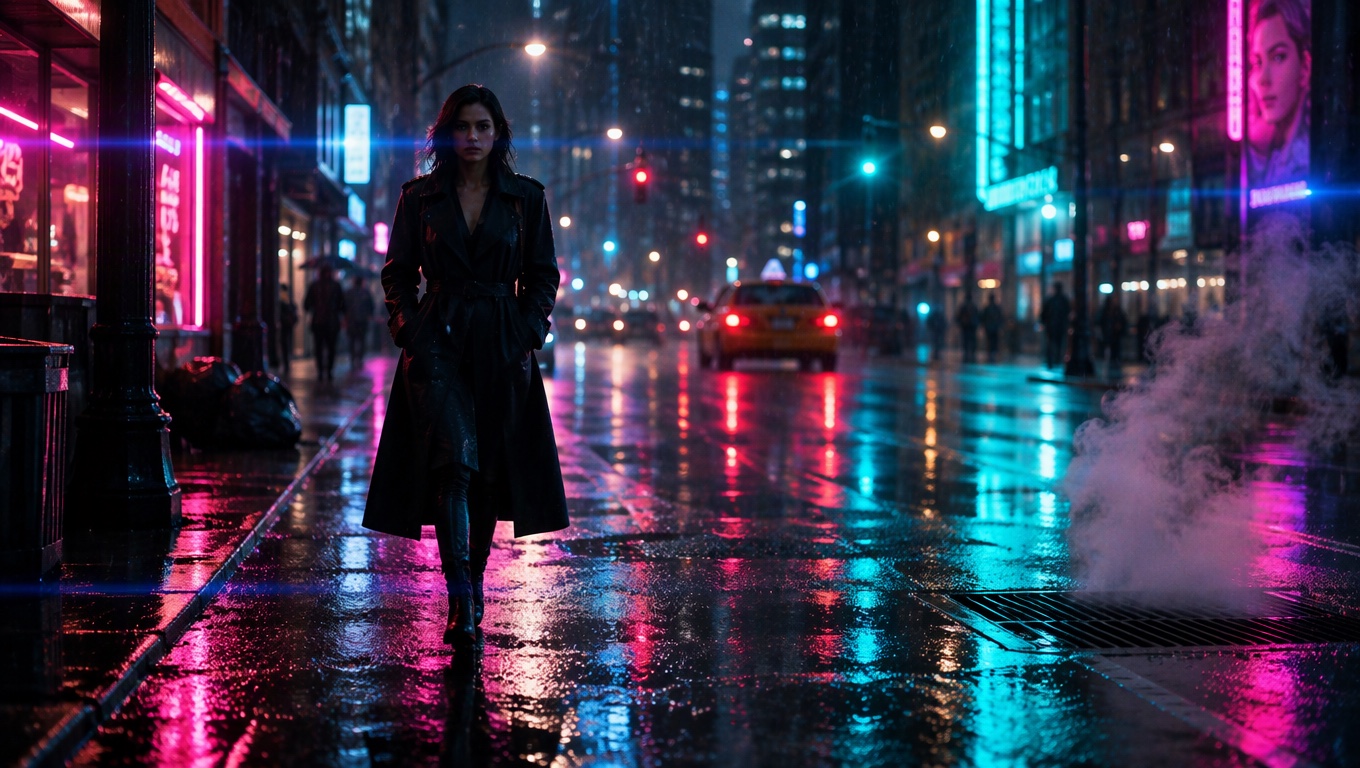
Image prompt: Cinematic film still, wide shot of a rain-soaked city street at night, a lone woman in a dark trench coat walking toward the camera under glowing pink and teal neon signs, light rain falling, reflections shimmering in puddles on the asphalt, steam rising from a street grate, a taxi's red tail lights blurred in the background, shallow depth of field, anamorphic lens flare, rich contrast.
Last verified: 2026-11-15. The comparison below follows MiniMax's own documentation and price list. It is not a side-by-side render test.
MiniMax H3 vs Hailuo 2.3 specs side by side
| Spec | Hailuo 2.3 | MiniMax H3 |
|---|---|---|
| Released | October 28, 2025 | July 31, 2026 |
| Status in MiniMax's API docs | Legacy model | Current model |
| Clip length | 6 or 10 s | 4 to 15 s, in whole seconds |
| Resolution | 768P (6 or 10 s), 1080P (6 s only) | 768P or 2K at any length |
| Frame rate | 24 fps | 24 fps |
| Sound | No audio option in the API | Voice, sound effects and music generated with the picture |
| Image input | One first frame | First frame, last frame or both |
| References | None | Up to 9 images, 3 videos and 3 audio clips, 12 files in total |
| Prompt length | Up to 2,000 characters | Up to 7,000 characters |
| Camera control | 15 bracket commands, such as [Push in] | Moves described in the prompt, plus short cues such as [pan], [zoom] or [static] |
| Faster variant | Hailuo 2.3 Fast (image-to-video only) | MiniMax-H3-Highspeed (768P or 480P) |
Sources: MiniMax's models overview, video generation guide, text-to-video API reference, price list and launch posts, all read on 2026-11-15.
Hailuo 2.3: what it was built for
Hailuo 2.3 was an update to Hailuo 02, not a new model family. MiniMax's launch post put the work into motion: more fluid and controlled body movement, more natural facial micro-expressions, and better response to motion instructions. It also widened the styles it handles well, from anime and illustration to ink wash painting and game CG. Hailuo 2.3 Fast came out alongside it as a cheaper, quicker option for image-to-video, which MiniMax said cut batch costs by up to 50%.
The limits are in the output. A Hailuo 2.3 clip is 6 or 10 seconds, 1080P only at 6 seconds, and comes back without sound. Control runs through one starting image and a prompt of up to 2,000 characters, with 15 bracketed camera commands for the move. That is enough for short social clips and silent B-roll, but dialogue, music or a scene that has to land on a planned final frame all need extra work after generation.
MiniMax H3: what changed after Hailuo 2.3
H3 is not 2.3 with extras. MiniMax built it on a new tokenizer (H3-VAE) and a new transformer (H3-Omni), and says it set the Hailuo 02 architecture aside. Voice, sound effects and music are modeled together with the frames, and the model was trained for multi-shot clips, so one 15-second generation can cut from a wide shot to a close-up. MiniMax also lists accurate text and brand rendering among its early results, which matters for title cards and product shots.
The practical changes follow from that. Clips run up to 15 seconds instead of 10, and 2K is available at every length instead of 1080P only at 6 seconds. You can fix the end of a shot with a last frame, or pin a character, a product and a camera move with reference images and videos. Prompts can be 3.5 times longer. The trade-off is price: H3 bills per second, and its cheapest standard setting costs more per second than 2.3's 768P clips. The MiniMax H3 prompt guide has 30 prompts written for the new model.
MiniMax H3 vs Hailuo 2.3 API cost per clip
Hailuo 2.3 is priced per clip and H3 per second, which makes them hard to compare at a glance. This table puts both on the clip lengths Hailuo 2.3 can make, using MiniMax's pay-as-you-go price list.
| Clip | Hailuo 2.3 | Hailuo 2.3 Fast | MiniMax H3, 768P | MiniMax H3, 2K |
|---|---|---|---|---|
| 6 s, 768P | $0.28 | $0.19 | $0.48 | — |
| 10 s, 768P | $0.56 | $0.32 | $0.80 | — |
| 6 s, 1080P | $0.49 | $0.33 | — | — |
| 6 s, 2K | — | — | — | $0.78 |
| 10 s, 2K | — | — | — | $1.30 |
| 15 s | not available | not available | $1.20 | $1.95 |
| Cost per second | $0.047 to $0.082 | $0.032 to $0.055 | $0.08 | $0.13 |
| Sound included | No | No | Yes | Yes |
H3 also charges $0.04 for each input image after the first 5, and bills input video seconds at the output rate. Read the table this way: a silent 10-second 768P clip costs 43% more on H3 than on Hailuo 2.3, but the H3 clip comes with a soundtrack. If you would otherwise pay for music or sound design, H3 can be the cheaper route.
Close-up, moving camera, night scene: H3 vs 2.3 by spec
Three common shots show where the differences matter. Each one below lists what the documentation says about the two models, a prompt written the Hailuo 2.3 way, and the same shot rewritten for H3. These are not results from rendering both models.
How does a close-up compare?
Facial micro-expressions were a headline improvement in Hailuo 2.3, so a close-up is where 2.3 is strongest. At 1080P it is limited to 6 seconds, enough for one change of expression. H3 can hold the same close-up for up to 15 seconds at 2K and add the sound of the scene.

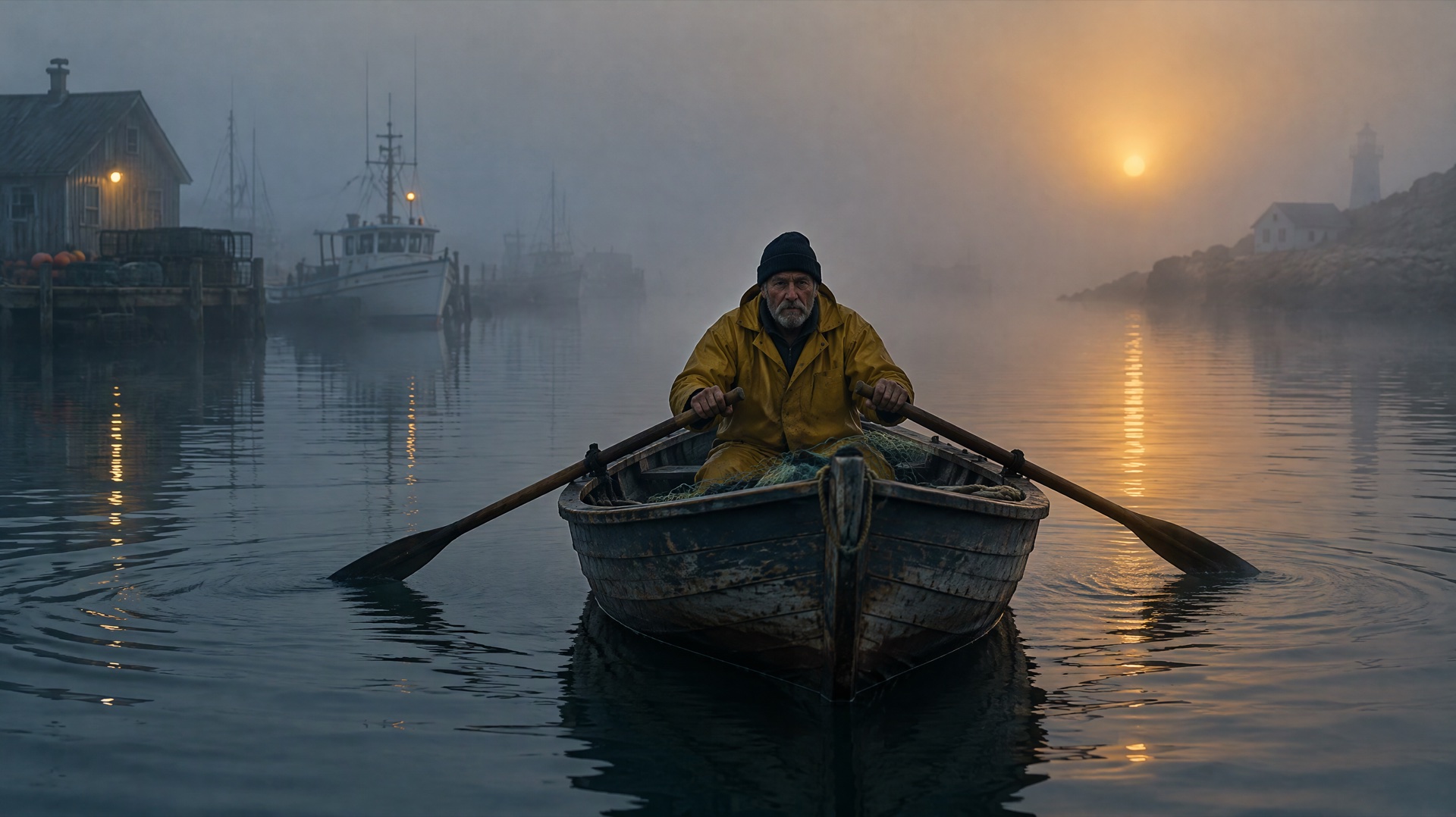
Image prompt: Cinematic film still, extreme close-up of an elderly fisherman's weathered face at dawn on a wooden boat, a slow smile beginning at the corners of his mouth, eyes glistening, deep wrinkles and grey stubble in sharp detail, soft golden side light, sea mist drifting behind him, shallow depth of field, natural skin tones, 85mm portrait lens look.
Hailuo 2.3 style:
[Push in] Extreme close-up of an elderly fisherman on a wooden boat at dawn, a slow smile spreading across his weathered face, eyes glistening, soft golden side light, sea mist behind him.
MiniMax H3 rewrite:
10s, 16:9. Extreme close-up of an elderly fisherman on a wooden boat at dawn. The camera pushes in very slowly as a smile spreads from the corners of his mouth and his eyes start to glisten. Soft golden side light, sea mist drifting behind him, shallow depth of field. Sound: gentle waves against the hull, a gull far away, his quiet breath.
How does a moving-camera shot compare?
Hailuo 2.3 handles movement through bracket commands, with up to 3 combined in one bracket. H3 reads a camera move written as a sentence, and its multi-shot training lets one clip change angle partway through, which a 10-second 2.3 clip cannot plan for.
Hailuo 2.3 style:
[Tracking shot, Pedestal up] A cyclist races down a narrow mountain road at sunset, pine trees flashing past, dust kicked up behind the back wheel.
MiniMax H3 rewrite:
12s, 16:9. A cyclist races down a narrow mountain road at sunset. The camera follows close behind the back wheel at speed, then rises above the trees as the road curves into the valley. Pine trees flash past, dust trails behind the tire. Cut to a low side angle as he leans into the last bend. Sound: tires on gravel, rushing wind, a freewheel ticking.
How does a night scene compare?
Night scenes test fine detail: rain, reflections and the lettering on signs. Hailuo 2.3 tops out at 1080P for 6 seconds or 768P for 10. H3 renders the whole clip at 2K, and MiniMax's note on accurate text rendering is relevant when signs or titles need to stay readable.
Hailuo 2.3 style:
[Static shot] A woman in a dark trench coat walks toward the camera down a rain-soaked city street at night, pink and teal neon reflecting in the puddles, steam rising from a grate.
MiniMax H3 rewrite:
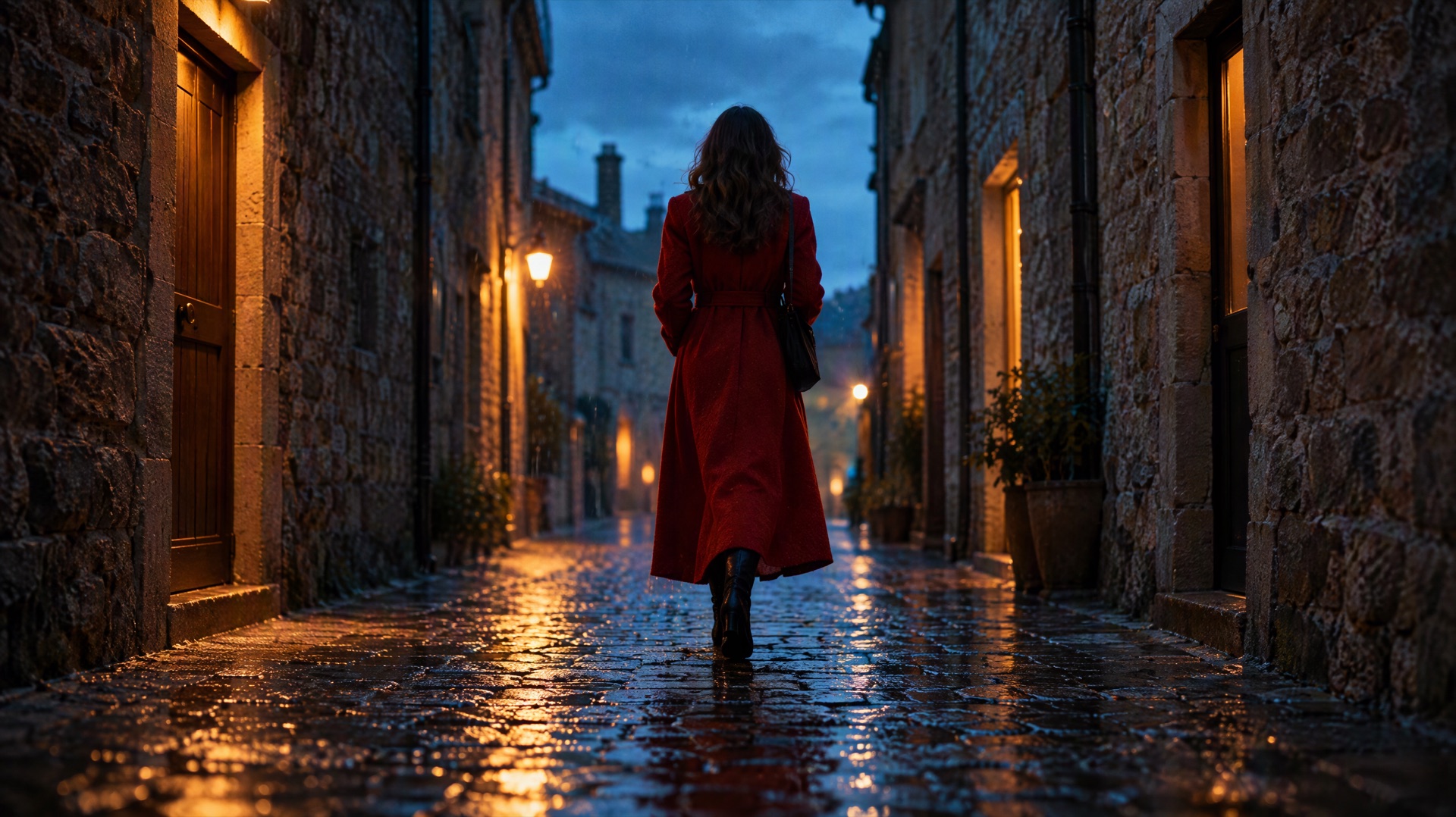
8s, 16:9. Night, light rain. A woman in a dark trench coat walks toward a locked-off camera down a rain-soaked city street, pink and teal neon shimmering in the puddles, steam rising from a street grate, a taxi's tail lights blurred behind her. Sound: steady rain, distant traffic, her heels on wet asphalt, a faint buzz from the neon.
Which to use: MiniMax H3 or Hailuo 2.3
Three rules cover most choices:
- Budget: if you need many short silent clips and call the MiniMax API yourself, Hailuo 2.3 Fast at $0.19 per 6-second 768P clip is the cheapest option on MiniMax's list. Once you pay for sound or need more than 10 seconds, H3 costs less overall.
- Speed: MiniMax does not publish generation times. For quicker drafts, its price list offers Hailuo 2.3 Fast for image-to-video and MiniMax-H3-Highspeed at 768P or 480P.
- Sound: if the clip needs dialogue, effects or music, use H3. Hailuo 2.3 has no audio option, so sound has to be added in an editor.
Hailuo 2.3. Best for: silent 6- or 10-second clips in bulk through the API, and teams with a tested 2.3 workflow they do not want to change yet. Not for: clips with sound, anything over 10 seconds, or shots that must end on a set frame.
MiniMax H3. Best for: 2K clips up to 15 seconds with sound, multi-shot sequences, and work that has to match reference images or a final frame. Not for: the lowest possible cost per silent clip.
How to move Hailuo 2.3 prompts to MiniMax H3
Your descriptions of subject, setting and light carry over unchanged. What needs work is camera control, length and sound. MiniMax's H3 guide has you describe camera moves in the prompt text, and accepts short bracketed cues such as [pan], [zoom] or [static] right after a key description. This table turns each of Hailuo 2.3's 15 commands into wording H3 reads well:
| Hailuo 2.3 command | Write this for MiniMax H3 |
|---|---|
| [Truck left] / [Truck right] | the camera slides sideways to the left (or right), keeping level with the subject |
| [Pan left] / [Pan right] | the camera stays in place and pans left (or right) to reveal … |
| [Push in] | the camera pushes in slowly toward … |
| [Pull out] | the camera pulls back to reveal … |
| [Pedestal up] / [Pedestal down] | the camera rises (or lowers) straight up (or down) |
| [Tilt up] / [Tilt down] | the camera tilts up (or down) from … to … |
| [Zoom in] / [Zoom out] | the lens zooms in (or out) on …, or add the cue [zoom] |
| [Shake] | handheld camera with a light shake |
| [Tracking shot] | the camera follows behind … at the same speed |
| [Static shot] | locked-off camera, no movement, or add the cue [static] |
A five-step checklist for each prompt:
- Replace every bracket command with one sentence about the move, and say where the move ends.
- Keep one main move per shot. If you combined 3 commands in one bracket, split them across shots instead.
- Add the length and aspect ratio at the top, for example "10s, 16:9".
- End with a "Sound:" line. H3 always creates audio, so leaving it out lets the model choose.
- If you used a starting image with 2.3, add a last frame too when the shot has to finish somewhere specific.
MiniMax H3 credits on Yovid for Hailuo 2.3 clip lengths
Yovid runs MiniMax H3 but not Hailuo 2.3. H3 on Yovid renders at 2K only, 5 to 15 seconds, in 21:9, 16:9, 4:3, 1:1, 3:4 or 9:16, and sound is always on. It needs Pro, Premium or a credit pack: the free plan does not include it, and Lite stops at 1080P. Here is what H3 costs at the lengths a Hailuo 2.3 user would reach for, from the generator's own pricing on 2026-11-15:
| H3 clip at 2K | Credit pack | At the Starter rate | Pro | Premium |
|---|---|---|---|---|
| 5 s | 23 credits | $3.44 | 16 credits | 16 credits |
| 6 s (2.3's 1080P length) | 27 credits | $4.04 | 19 credits | 18 credits |
| 10 s (2.3's longest clip) | 46 credits | $6.88 | 32 credits | 32 credits |
| 15 s (H3 maximum) | 68 credits | $10.17 | 48 credits | 47 credits |
The Starter rate is $29.90 for 200 credits, about $0.15 a credit. Up to 5 reference images cost nothing extra, and each one after that adds about 1.4 credits. A reference video's seconds are billed on top of the output seconds, so a 5-second clip with a 5-second reference video costs 46 credits on a pack. Credits are only spent when a clip is generated. Per clip, the MiniMax API is cheaper; Yovid runs in the browser with no API setup and puts H3 on the same balance as its other video models.
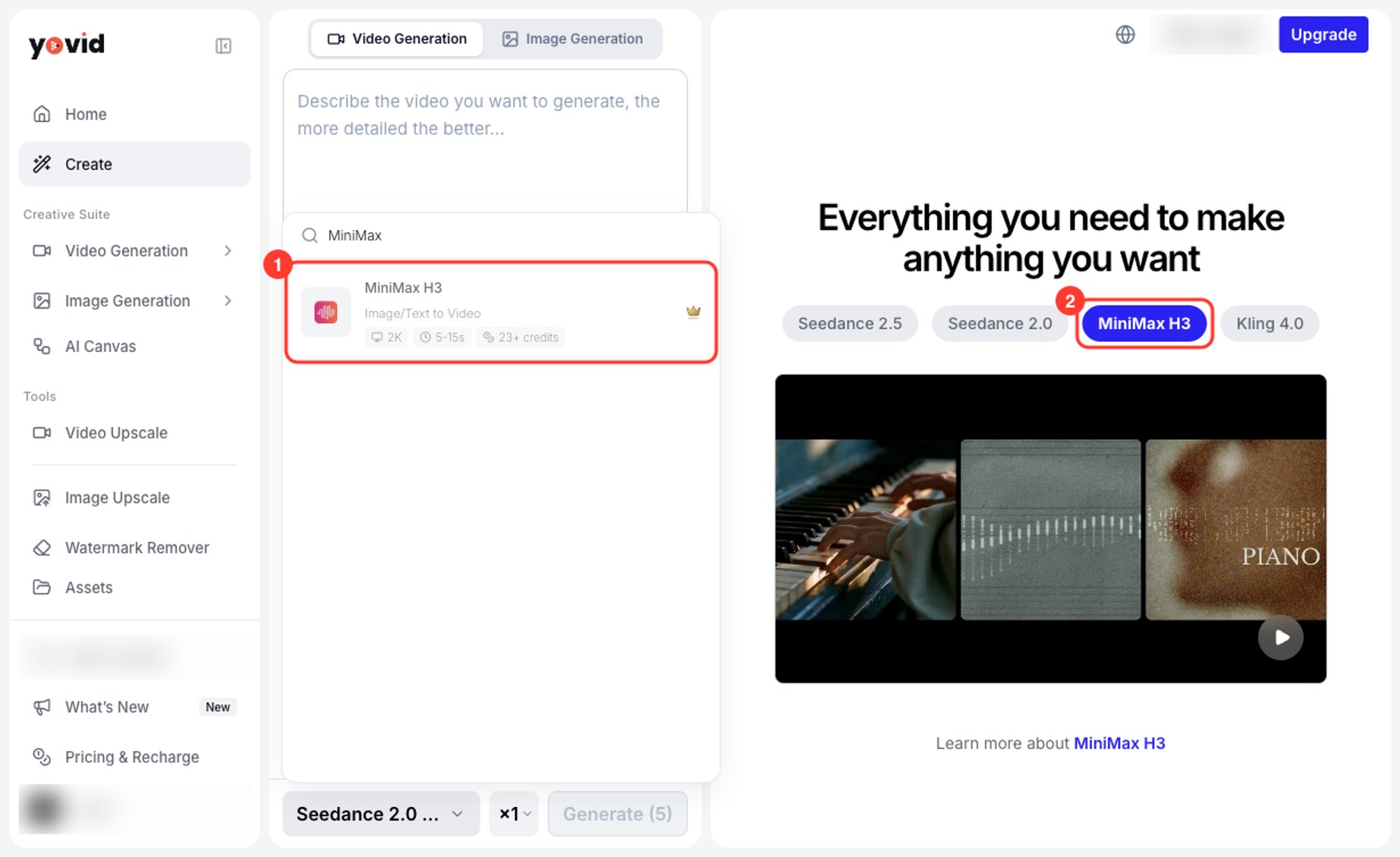
The Yovid video generator with the model menu searched for "MiniMax": (1) MiniMax H3, the only MiniMax model listed, with its 2K, 5-15s and 23+ credits labels; (2) the MiniMax H3 preview tab.
To start, open the text-to-video generator for a prompt or the image-to-video generator for a first or last frame, and pick MiniMax H3 in the model menu. Plan prices are on the pricing page, and the AI video cost guide compares H3 with every other video model on Yovid.
FAQ
Is MiniMax H3 an upgrade of Hailuo 2.3?
It is the next generation. MiniMax's line runs Hailuo 01, Hailuo 02, then H3; Hailuo 2.3 was an update inside the Hailuo 02 generation. H3 uses a new tokenizer and transformer instead of the Hailuo 02 architecture.
Will Hailuo 2.3 be shut down?
MiniMax's API docs and price list now show Hailuo 2.3 and 2.3 Fast under legacy models, still with prices. On 2026-11-15 neither page gave a shutdown date. Check MiniMax's docs before you build anything new on 2.3.
Which is cheaper, MiniMax H3 or Hailuo 2.3?
Per silent clip, Hailuo 2.3: $0.28 for 6 seconds at 768P on the MiniMax API, against $0.48 for 6 seconds of H3 at 768P. H3's price includes generated sound, so the gap narrows when you count the cost of adding audio later.
Which one generates sound?
Only MiniMax H3. It generates voice, sound effects and music together with the picture. Hailuo 2.3's API has no audio option.
Can I switch between MiniMax H3 and Hailuo 2.3?
On the MiniMax API, switching means changing the model in your request and rewriting the prompt for camera moves and sound, since H3 does not use the same 15 bracket commands. On Yovid only H3 is available, so bring your 2.3 prompts over with the table above.
Try MiniMax H3 with your Hailuo 2.3 prompts
Take one prompt you liked on Hailuo 2.3, rewrite the camera command as a sentence, add a sound line, and run it at 5 seconds before you commit to 15. More model match-ups are in Model Comparisons, including the longest AI video models that reach 30 seconds in one clip. When your prompt is ready, open the AI video generator and pick MiniMax H3.